Water, waste and gas all travel through a house in pipes, and a plumber service is who you call when one of those lines misbehaves: a stain spreading on the ceiling, a sink that holds its water, a shower that only runs cold. Describe the trouble by phone or in the form. A local plumber then gets booked to visit through us, and a priced scope reaches you on paper before any wrench turns.
Everything below applies across Whittier, Downey, Norwalk, Pico Rivera and the surrounding](/service-areas/). The Rio Hondo Plumbing main page shows how a request moves from your message to a visit.
What does a plumber service actually cover?
Anything that moves water, waste or gas through a building. In practice that means supply pipes, drain and vent lines, water heaters, toilets, sinks, tubs, showers, outdoor spigots, pressure regulators, shutoff valves and the gas runs feeding a range, dryer or furnace.
Calls tend to land in four buckets:
- Fix what broke: a drip, a running tank, a pinhole in copper, a shutoff that has frozen in place.
- Open a stopped line: sink, tub, toilet, or the main drain out to the street.
- Swap or add equipment: water heater, faucet, disposal, toilet, softener.
- Bigger pipe projects: repiping, slab leaks, a gas branch for a new appliance, bathroom remodels.
Age drives a lot of it locally. Postwar tract houses in Whittier, Norwalk and Downey went up using galvanized steel or the earliest copper, with cast iron under the floor. Galvanized clogs from within, cast iron cracks, and original shutoffs freeze solid. A call about one drip can turn into a talk about replacing a stretch of line, and that is where the priced scope earns its keep.
What types of plumbing services are there?
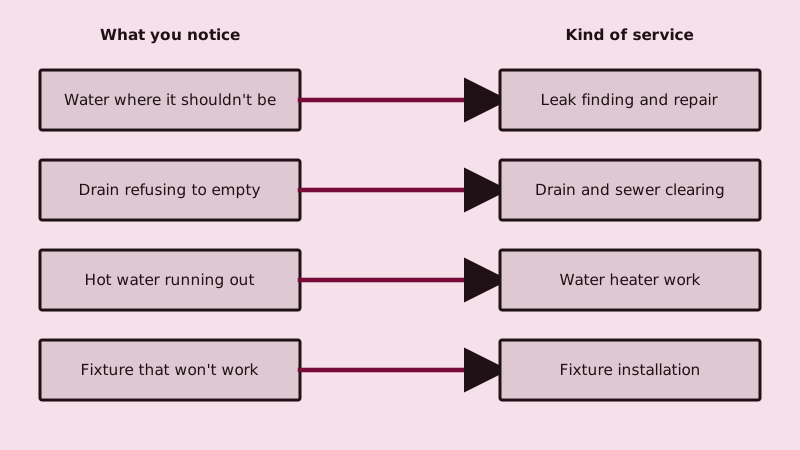
Eight main kinds: emergency repair, drain and sewer clearing, leak finding and pipe repair, water heater work, fixture installation, gas piping, repiping, and backflow testing. Pick by symptom: water showing up where it shouldn't, water refusing to drain, or a water heater that quit.
| What you notice | Kind of service | Where to look |
|---|---|---|
| Puddle, damp ceiling | Leak repair | Leak plumber |
| Toilet or sink will not clear | Drain work | Clogged toilet plumber |
| Lukewarm or cold showers | Water heater | Water heater repair |
| Gas smell, new appliance | Gas piping | Gas line plumber |
| Pipes failing house-wide | Repipe | Whole-house repipe |
What will a plumber service run you?
One 2026 price survey lists $75 to $175 per hour for a plumber, with a call-out charge of $75 to $200 that some shops credit when you go ahead. Shops in southeast LA County tend to price toward the upper part. Treat these as a yardstick only. Your actual figure arrives once someone has seen the problem in person.
The same survey gives flat-rate examples. Clearing one drain: $150 to $350. Replacing a faucet: $200 to $400. Swapping a toilet: $200 to $500. A 40 to 50 gallon gas water heater: $1,200 to $2,500. Anything inside a wall, on a gas line or on the sewer lateral climbs from there, and permit charges can add $50 to $500.
For job-by-job detail, open what plumbing costs and hourly rates.
Is there an emergency service plumber?
Yes. A burst pipe, a water heater emptying itself into a closet, or sewage rising through a tub drain all count, and we'll line up the earliest visit a local plumber can give. While you wait, turn the water off at its entry point to your lot. Then fill out the form so we have the details.
After-hours work costs extra. The survey above quotes a surcharge between 50 and 150 percent and emergency call-out fees between $200 and $450. Ask for the number before saying yes.
Gas is different. If you smell it, skip the plumber for now. Walk everyone out of the house and keep going until you are well away. SoCalGas can be reached at 1-800-427-2200 after you are out, or 911 should anything look dangerous. Emergency plumbing walks through the shutoffs.
Can a plumber service handle ADUs and mobile homes?
Both are routine work. An accessory dwelling needs fresh supply, drain and vent lines, usually its own water heater, and gas if there is a range. A mobile home is plumbed differently, often with thin plastic or PEX run beneath the floor, so work means getting into the crawlspace behind the skirting.
A new ADU bath or kitchen needs a permit, and only a contractor with a license issued by the state can do permitted work. Before signing, ask who files for it and which city office inspects. Whittier's is the Building & Safety Division.
Specifics for manufactured housing are covered in the guide to mobile home plumbing inspections](/mobile-home-plumbing-inspection-whittier/). For an ADU, bring a rough fixture sketch to the first conversation.
How do you pick the best plumber company?
Ignore claims of being the best. Check what can be verified: an active contractor license, a written scope with materials listed, a straight answer on permits, and terms on parts and labor. A license lookup takes a minute through the state board's online search and tells you more than any slogan.
State law sets the floor: a license is needed when labor plus parts hit $1,000, and so does anything that requires a permit. Written contracts are required above $500. Walk away from anyone who demands a large cash payment up front, will not write the price down, or brushes off the permit on a water heater swap. Deposits are capped in California too, so confirm today's limit with the CSLB before you pay.
What needs to be ready by the time the plumber walks in?
Clear the work area, know the answers to a few questions, and have photos on your phone. A plumber who can reach the heater, the sink base cabinet or the drain cleanout at once spends less time on your clock.
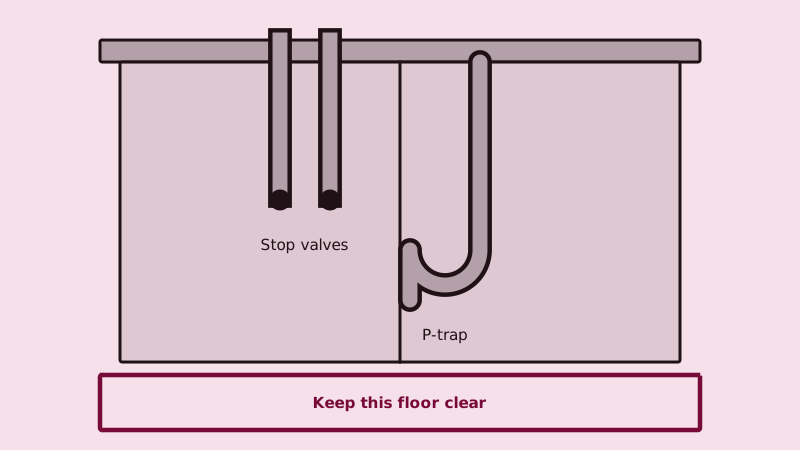
- Clear out the cabinet or closet nearest the trouble.
- Find the main water valve and the gas shutoff, and check that both still move.
- Snap pictures of the leak, the stain, or the data label on an appliance.
- Read the water heater's label for its age and tank size.
- Read the water meter while every tap is off. If the dial creeps along, water is leaking somewhere. The EPA ties typical household leaks to losses past 9,300 gallons yearly.
When that is done, ask for a price in your own words.
Common questions
Does a "135 rule" exist for plumbing?
We cannot tie that phrase to any chapter of California's plumbing code or to a standard pricing rule. It tends to be shop slang or a classroom shortcut. If a number like that shows up on your quote or permit, ask the plumber which code section it refers to and get the answer written down.
What do plumbers do besides stop leaks?
They put in water heaters, toilets, faucets and disposals, open blocked drains, run gas to new appliances, repipe whole houses and test backflow devices. They also size pipes and vents, read permit rules and hunt down hidden leaks. A good share of the job is deciding what to replace and what to leave in place.
How long will a pipe repair clamp hold?
A clamp is a bridge, not a repair. On a small pinhole in otherwise healthy pipe it may hold for months, but it does nothing for corrosion, and the metal nearby keeps thinning. Use one to buy time until someone can cut away the bad section, especially on aging galvanized or copper.
What takes the place of Drano in a plumber's truck?
They start with a hand snake or motorized auger, then bring a camera or a water jet for blockages that return. Store-bought chemical openers can eat at old pipe and burn whoever opens the trap afterward. If you already poured one down, mention it on the call.
Which questions belong on your list before hiring?
The license number comes first: enter it at the state board's lookup site, and only then talk money: flat-rate or hourly, any call-out charge, what coverage the labor and parts carry, and whether each part is itemized. Ask about permits too, and who handles that paperwork. Keep every answer in writing.