Yes, but usually only when something is wrong. A softener in good order spends a little water cleaning and refilling itself each week, small next to showers and laundry. A bill that climbs sharply after you add or service one is a clue: the unit may be cycling too often, stuck in rinse, or leaking at its drain. For the setup side, see water softener installation.
What does a softener itself draw from the supply?
Some, because it must clean itself. When the resin beads are full of calcium and magnesium, the valve backwashes, draws brine and rinses, sending that water down the drain. Each cycle uses a modest volume that varies by model and hardness setting, so check the manual for your unit rather than trusting a rule of thumb.
What this means in practice: a correctly set unit regenerates only when needed, perhaps every few days in a family home. An older timer-driven model may regenerate by the calendar even when the resin is still fresh. If your bill rose only slightly after installation, that is normal. If it doubled, look for a fault.
Also worth knowing: in very hard water the unit works harder. City of Whittier water averaged about 250 mg/L total hardness in its 2025 report, and the USGS puts anything beyond 180 mg/L into the very hard class, so softeners here tend to cycle more often than in soft-water areas.
Which problems turn a softener into a water waster?
Four are common: a control valve stuck in the backwash or rinse position so water runs to the drain nonstop, a hardness or capacity setting that triggers regeneration far too often, a failed seal that lets water bypass the resin, and a drain line or brine tank leak. Any of these can run for weeks without noise.
Signs to check:
- A trickle sounds inside the cabinet or along the drain line when nobody is using water.
- The brine tank overflows or the water in it is much higher than the salt.
- The control head cycles at odd hours, or more than once a day.
- The floor around the unit or the drain connection is damp.
A stuck valve is the classic bill-killer. Because the water goes down a drain line and out of sight, you never see it, but the meter does.
How do I test whether my softener is wasting water?
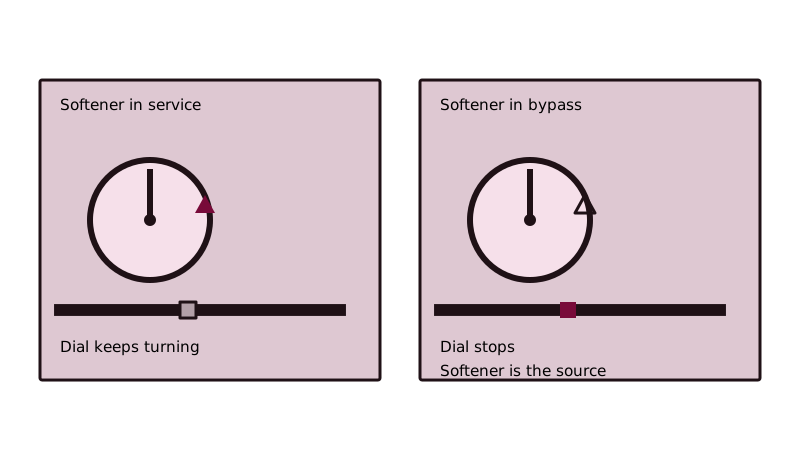
Close every fixture, note the water meter reading, and look at the little leak indicator. If the dial moves with nothing running, water is escaping. Then put the softener in bypass (a valve or lever near the unit) and check again. If the movement stops, the softener is the source.
Step by step:
- Turn off all taps, the dishwasher, the washer and the ice maker.
- Read the meter, or watch the small triangle or dial that spins with any flow.
- Move the bypass valve to bypass, then wait ten minutes.
- If the dial stops, call a plumber about the unit. If it keeps turning, look for the leak elsewhere in the house.
Per EPA figures, leaks cost the average household upward of 9,300 gallons in a year, which is reason enough to chase down a crawling dial. When the softener tests clean, the page on a high bill without a visible leak covers where to look next, and the usual reasons for a big bill rounds out the list.
Could the way it was installed be the cause?
Yes. An undersized drain line, a backwash hose sent uphill or one loose fitting can leave a unit leaking or running badly. Poor installation also shows up as a dripping valve fitting or a drain hose that slips off the standpipe. A plumber should check pipe sizing, the air gap and the drain.
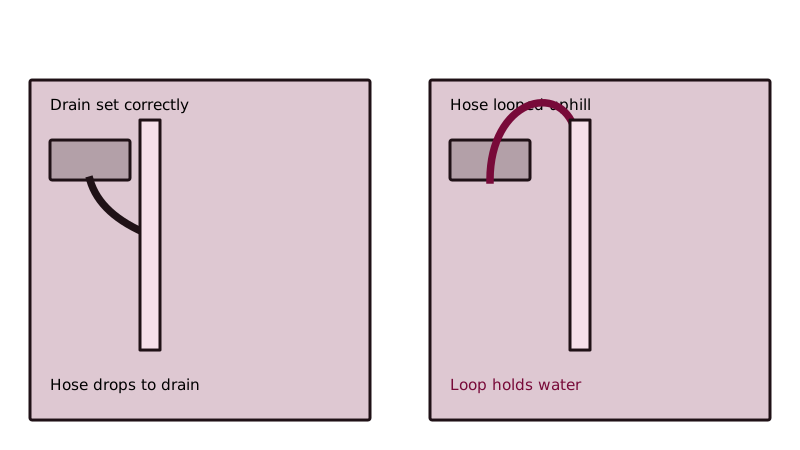
For more on how the drain is meant to connect, read water softener drain line installation. The general method is covered in how a softener installation goes, and the salt-based type has its own page: salt based water softener installation.
Does soft water change how much water I use?
Not directly. Soft water does not add volume to the pipes. It can change habits: people sometimes rinse longer because soap feels slippery in soft water, which can raise use a little. On the other side, softened water cuts scale, so appliances and heaters can work more efficiently. The USGS notes scale can lower water heater efficiency.
So the net effect is small and can be positive. What matters more is whether the unit is working as intended and whether there is another leak entirely.
If scale has already built up inside, removing hard water scale and hard water scale prevention explain what can be done beyond a softener.
Could my faucet or toilet be to blame instead?
Often, yes. The softener takes the blame because it is the newest thing in the house, but a running toilet or dripping faucet can account for thousands of gallons. Test the toilet tank with a little dye, look under sinks for dampness, and compare the meter before and after you flush.
Drips are covered in what a dripping faucet does to the bill. If the meter test pointed to the softener, though, the toilet is not your problem.
At what point does the softener need a plumber?
Get help when the meter moves normally but stops in bypass, when the control valve will not leave rinse, when a puddle appears, or when the bill leaps after a new unit goes in. The plumber inspects the control head, drain line and brine tank, then says whether repair or replacement is the better path.
Describe the symptoms and the meter test in the price request form. Someone local comes out to homes around Whittier, with a price in writing delivered before any work starts. If you want to understand price ranges, the page on whole house softener installation cost explains what drives them.
More services show up on the main page.
Common questions
How many regenerations a week are normal?
It depends on household water use, the unit's capacity and your water hardness. Many homes see one every few days. A unit cycling daily, or more than once a day, may be set wrongly or have a fault. Compare against the manual, then ask a plumber if the numbers do not match.
Does a softener use more water in very hard water?
Generally yes, because the resin fills with minerals faster and needs more frequent regeneration. Whittier's reported average of about 250 mg/L is in the very hard range, so expect regular cycles. The setting should match your actual hardness, not a default.
Can a water softener raise my sewer charge?
This page does not state billing rules, since they vary by utility. Water that goes down the softener drain may be counted in what you pay for in some billing setups. Ask your water supplier how it charges, and compare your meter use before and after installation.
Can I fix a stuck softener valve myself?
Sometimes a reset or a clean of the injector helps, and the manual will show the steps. If the valve still will not leave rinse, or if water is leaking, stop and phone a plumber. Never force parts, and leave the unit in bypass until it is repaired.
Is salt-free treatment any different for water use?
Salt-free conditioners do not regenerate with brine, so they do not send backwash water to the drain. They also leave the hardness minerals in the water rather than swapping them out, so the results differ. Ask a plumber which approach suits your goals before you buy.