An envelope from the water company mentioning backflow means one device on your pipes must be shown to work, and a recognized tester has to report it. The device's only job is to keep your plumbing's contents from sliding back into the street main. Much like regulated gas plumbing, it is a rules-and-paperwork trade, not a Saturday project.
What triggered the notice from my water company?
Your service has a device the supplier tracks, typically on a lawn irrigation setup, a sprinkler line for fire, a pool or fountain feed, or some business process. Under the state's cross-connection policy a public water system looks after the assemblies in its program, and it mails owners a notice so each one is tested yearly.
Backflow is plain reverse flow. Wikipedia names two causes. Back siphonage happens when pressure in the supply falls below pressure inside your plumbing. Back pressure happens when your own system pushes harder than the supply does. Either way, whatever sits in your pipes, fertilizer water or boiler water for example, could be drawn toward the public side.
Water in the Whittier area comes from more than one company. The City of Whittier runs its own system, and Golden State Water and other suppliers cover pieces of the map. Your notice names the right one with the due date and a place to send results.
How do I recognize the device on my property?
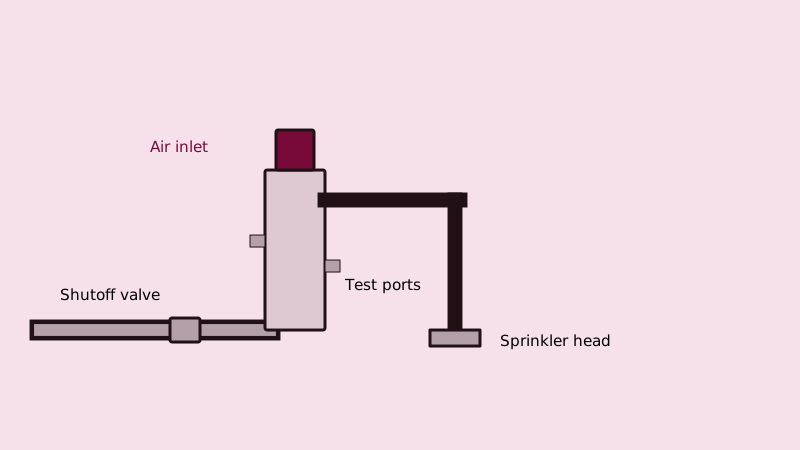
Most homes have a compact brass or bronze assembly on the sprinkler line: a short run of pipe with a pair of shutoffs and a couple of little test ports. Fire lines and bigger properties may have a larger assembly beside the meter. Outdoor hose bibs carry a little vacuum breaker on the spout.
Wikipedia sorts preventers into double check valves, reduced pressure zone valves and pressure vacuum breakers, and the riskier the substance behind the pipe, the more protective the type. A garden sprinkler line and an industrial process therefore do not share the same hardware.
Snap a photo of the device and its tag. Jot any numbers stamped on the body, since the tester needs size and model.
Who may test it under California rules?
Only someone holding a backflow credential from a body California recognizes. The State Water Board says testers used by public water systems must hold one, and from July 1, 2027 the issuing body must be ANSI accredited to ISO/IEC 17024. Many suppliers keep their own approved list too.
Before booking, ask whether the supplier takes that tester's reports and how results are filed: paper form, portal, or direct submission by the tester.
Testing differs from installing. Putting in or swapping an assembly is permit work, so state law routes it to a contractor with a California contractor license. A local plumber comes out through us, and the quote for any repair is written first.
What should I expect when the tester arrives?
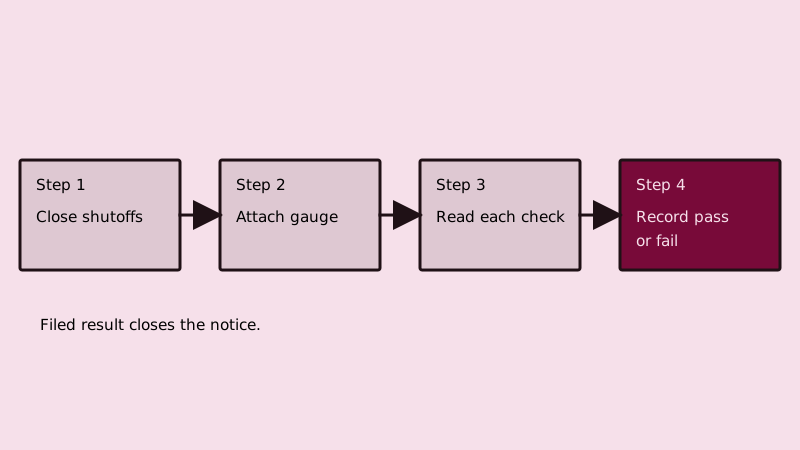
A gauge connects to the test ports, valves are closed one after another, and the tester reads the pressure at each stage. The protected line loses water briefly. One assembly is normally a short call, and the paperwork records pressures plus a pass or fail.
Irrigation owners should turn the controller off beforehand so no zone fires mid-test. A fire line may need the alarm or sprinkler company warned. Someone has to unlock any gate or box around the device.
Afterward, confirm the supplier actually has the result, because that is what closes the notice. File your own copy.
The full sequence is laid out in a walkthrough of the backflow test.
If the device fails, what comes next?
A fail means a leak or a valve not seating. The assembly gets repaired or replaced and then retested. Repairs usually mean fresh seals or check parts, or an entire new assembly. Until a pass is recorded, the supplier may require the line to be isolated. Any repair is priced before it begins.
Reduced pressure types have a relief port that drips when something is off, so a steady drip is a warning. Plugging it only hides the problem.
Cost follows device size and type, and whether it is hard to get at. See backflow device testing costs for the drivers, and backflow testing services for the scope of a visit.
Is a mobile home different, and what about a plumbing inspection?
A mobile home on its own lot with a sprinkler system can carry the same device as a house, and the notice applies the same way. A park may have devices on its own water system, and then the park operator is the one to ask. Ask the park manager first.
A plumbing inspection is a different request, commonly linked to selling or insuring the home. It looks at supply lines, drains, the water heater and the connections under the floor, not the backflow device. Mobile home plumbing inspection explains the scope.
What if I am not sure I own one?
Walk the sprinkler line, any fire line, a pool fill and the place where water enters the property. A device with test ports probably needs testing. If no notice ever came, call the number on your water bill and ask what your address has on file.
Whittier's city water customer service is (562) 567-9530. Golden State Water answers customers at 1-800-999-4033. One call usually settles whether an address is on a testing list.
To line up a visit, send the address, the device type and the notice date with the price request form. The rest of our plumbing work for southeast Los Angeles County is on the Rio Hondo Plumbing home page, if you want to browse.
Common questions
How frequently must a device be tested?
Every year is the usual rule. The state's handbook says public water systems ensure their program assemblies are tested at least annually, and a supplier may ask more often. New, moved or repaired assemblies are tested too. Your notice states the date. Missing it is the usual cause of follow-up letters.
Can any plumber run the test?
Not for supplier reporting. A test counts when a credentialed tester does it with calibrated gear and the supplier accepts the report. A general plumber may or may not hold the credential, so ask beforehand and ask to see it when they arrive.
Is a home test different from a business one?
The procedure is the same. Business sites often have bigger or more numerous assemblies and higher hazard ratings, and those cases are discussed under commercial backflow testing. Homes more often have a single sprinkler assembly, so the visit is shorter and cheaper.
The deadline on my notice has passed. Now what?
Phone the water supplier and book a test straight away. Suppliers set their own follow-up for late tests, and the letter or customer service line tells you which applies. A quick test usually settles it, while waiting rarely helps and can only prolong the paperwork.
May I swap a failed device myself?
California treats permitted plumbing as contractor work, and replacing an assembly on a service line normally lands there. The supplier may want the new device tested after installation. Owners can keep the area clear, switch off the sprinkler controller and watch for drips.