Home gas piping in California answers to the state Plumbing Code as each city adopts it, and nothing should vanish behind a wall until an inspector has watched it hold pressure. Who may do the job is covered under gas plumber requirements; this article explains the rules the contractor works to and what you should see on site.
Whose rulebook governs gas pipe in a Whittier house?
The California Plumbing Code, part of Title 24, is the rulebook for fuel gas piping, and a local building division enforces it. Work must meet the code edition the city enforces, any local amendments and the manufacturers' instructions. In Whittier, the office to phone is Building & Safety at (562) 567-9320.
Local amendments can add requirements, so a rule in one city may not apply in the next. SoCalGas serves Whittier and each neighboring city we cover, and it owns the meter side; the code governs your side. Ask the building division which edition it enforces and whether it has local changes for gas work.
What gas pipe materials do the codes allow?
The code's material sections and listed standards govern. In summary: no cast iron for fuel gas, plastic only where the code permits and installed to its listing, and corrugated stainless steel tubing (CSST) listed and installed as its maker directs.
Burrs and defects are not tolerated; faulty material is replaced, not patched. Used pipe is reused only if clean and suitable. Which pipe suits your job, black iron, CSST or another listed material, is a decision for the contractor and the permit counter. Per-foot material prices are on gas line cost.
What do the rules say about joints, valves and outlets?
Joints and connections must be gastight and made with approved fittings or joining methods. Each gas appliance needs an accessible shutoff valve. Outlets with no appliance attached must be capped or plugged gastight, and unions cannot be hidden inside walls, since they must stay accessible.
Changes of direction use approved fittings or factory bends. Outlet pipe extends at least an inch through finished walls and ceilings and two inches above floors or slabs, and outlets sit far enough from walls to allow a wrench. A sediment trap is required downstream of the appliance shutoff where the code calls for one, with exceptions such as cooking ranges and clothes dryers.
How must gas piping be supported and protected?
Pipe must be supported securely, not by other piping, with spacing set by the material. Where it passes through framing, it needs protection from damage, and metal piping exposed to corrosive conditions, including where it goes through exterior walls, needs corrosion protection. Gas pipe cannot run in chimneys, vents, air ducts or elevator shafts.
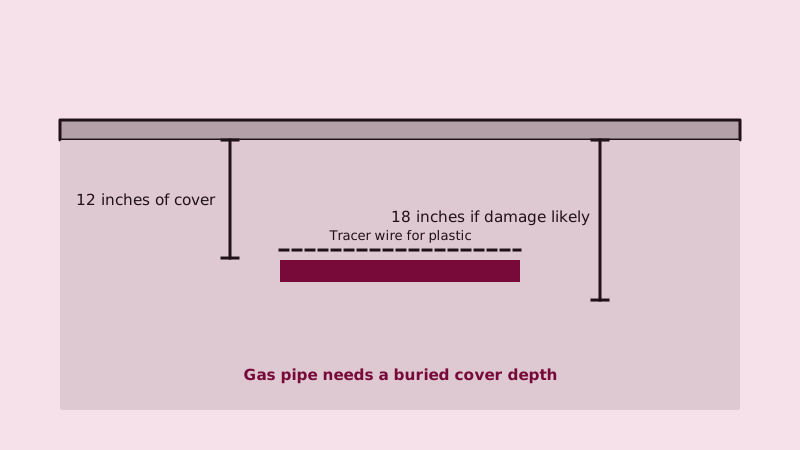
Tubing concealed in hollow walls needs a steel striker plate, and CSST systems are bonded to the home's grounding electrode using a 6 AWG copper jumper or heavier. Buried gas pipe needs a foot of cover, 18 inches where damage is likely, and plastic pipe gets a tracer wire. These are summaries; the contractor follows the full code.
How is a gas line tested and inspected?
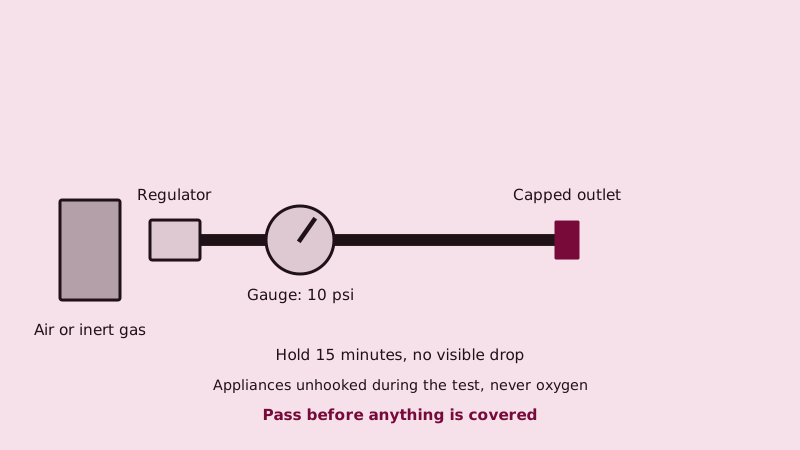
First comes a visual check, then a pressure test with air, nitrogen, carbon dioxide or another inert gas, and never oxygen. Under the code, the test holds at 10 psi or more for a quarter hour with no visible drop and appliances unhooked. Two inspections are involved: one at the pressure test, before pipe is covered, and one at the end.
Do not let anyone cover pipe before the first inspection, and do not accept a job with no permit card on site. The inspector will want the permit card and any approved drawings. Test details can differ by city and code edition, so confirm with the Whittier division or the city where your home is. Permit prices are listed under what gas lines cost.
Do I need an earthquake or excess flow shutoff valve?
Ask the Whittier division, because the answer depends on where you live and what you are building. Some California cities add a local rule requiring an approved seismic or excess flow shutoff device when a gas line is altered or extended. That is a local rule, not a statewide one, so ask the Whittier division what covers your project.
Already have an earthquake valve? Resetting one is explained separately, and gas shutoff valves in earthquakes covers what the device does. Following a quake, gas in the air means everyone out. Then call 1-800-427-2200, the SoCalGas emergency line, and use 911 for any danger.
Who may do residential gas piping work?
Gas piping is permit work, and California reserves it for contractors holding a current state license. A plumbing classification is the usual fit. Some cities issue permits to owners working on their own houses, though that does not turn gas piping into a safe DIY job; mistakes mean leaks, fire or carbon monoxide.
Each bidder should give you a license number, which the state board's site can confirm. Written contracts start at $500 of work, licensing at $1,000 or any permit job. A written quote begins at the price request form, while the home page shows more of the area we serve, from Whittier to Pico Rivera.
How do the codes affect a water heater or range replacement?
Swapping a gas water heater or range touches the gas connection, the shutoff valve and the vent. The connection must be gastight and tested, and a flexible connector must be listed. Many cities treat the swap as permit work. Pico Rivera, for instance, offers over-the-counter permits for water heater change-outs.
Permits for replacing a heater walks through those steps. Gas appliances also bring venting and combustion air questions that are outside this article. Carbon monoxide alarms and smoke alarms may be checked at the final inspection of some permitted work, so ask the division and be ready for that.
Does backflow testing apply to gas lines?
No. Backflow assemblies protect the water supply, not gas piping. The inspection overlap is only that a permit visit may also look at other plumbing changes. A new irrigation system or water line with a backflow device gets that device tested on its own; see backflow prevention testing.
Keep the two separate when you talk to contractors. A gas inspection checks pipe, joints, valves, support and the pressure test. A backflow test checks that water cannot flow the wrong way. Ask each bidder who handles which permit and which inspection, so nothing is missed at the final.
Common questions
What pressure is a residential gas line tested at?
The California Plumbing Code calls for 10 psi minimum held 15 minutes minimum with no perceptible drop, using air or an inert gas and with appliances disconnected. Details can differ by city and edition, so confirm with Whittier's Building & Safety Division.
How long do the permit and inspections take?
Permit processing and inspection timing vary by city and workload, and we do not promise any time. Two inspections are normally needed, so allow for at least two scheduling windows. A short appliance run may be done in a day, while the final sign-off depends on the inspector's calendar.
What belongs on my question list for a gas contractor?
Collect the license number first. Next, pin down permit responsibility, pipe material, who runs the pressure test and whether inspection fees are included. Ask also how an inspector's correction would be handled. Anyone who says gas piping needs no permit is the wrong choice for this job.
Who should be home for the inspection?
Somebody over 18 has to let the inspector in and have the permit card ready. Away that day? Tell the contractor in advance who will stand in. Keep pets out of the work area, and make the meter, appliances and any open pipe easy to reach.