Yes. California counts a water heater swap as permitted work, even when the new tank sits exactly where the old one did, and an inspector visits afterward. The plumber normally files the paperwork. Rules and counters differ by city, so the list below shows who to call. For everything else about heaters, start at the water heater repair page.
Which building office handles a water heater permit near Whittier?
Whichever city your street belongs to. Whittier's Building and Safety Division, 13230 Penn Street, handles permits and inspections and answers at (562) 567-9320. Neighbors have their own offices, listed below from each city's pages. Call first, since hours, extensions and online portals change.
| City | Office and phone |
|---|---|
| Whittier | Building and Safety, (562) 567-9320 |
| Downey | Building and Safety, (562) 904-7142, closed Fridays |
| Norwalk | Building and Safety, (562) 929-5733 |
| Pico Rivera | Building and Safety, (562) 801-4360 |
| Santa Fe Springs | Building, (562) 868-0511 ext. 7560, closed Fridays |
| Bellflower | City Hall main line, (562) 804-1424, ask for Building and Safety |
| Paramount | Building and Safety, (562) 220-2036, counter closed Wednesdays 11:30 a.m. to 2:30 p.m., confirm by phone |
| Cerritos | Building and Safety, (562) 916-1209 |
| La Mirada | Building and Safety, (562) 943-0131, with County Public Works doing plan check and inspections |
| La Habra Heights | Building and Safety through City Hall, (562) 694-6302 ext. 220 |
| Hacienda Heights | LA County Public Works, La Puente district office, (626) 961-9611 |
Artesia and Hawaiian Gardens have their own city offices too; look up the number on each city's website. Local notes for every city sit on the service areas pages.
What is the permit for, exactly?
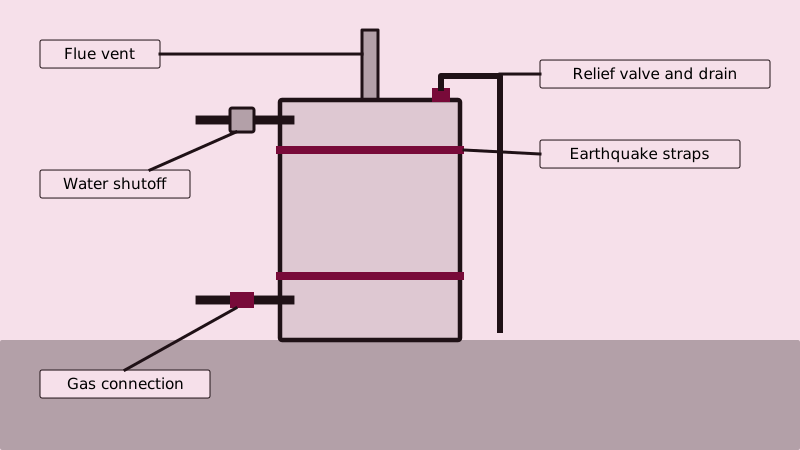
It covers the swap as plumbing and gas work: water connections, the gas line or electric circuit, the safety valve that releases overheated or over-pressured water, along with its drain pipe, flue venting on gas units, and the earthquake straps. The city issues it, and an inspector closes it once the finished work passes.
A like-for-like tank change in the same place is the simple case. Moving the heater, converting from electric to gas, adding a gas line or switching to tankless are bigger jobs, and some cities send those through plan review before issuing the permit.
Pico Rivera shows how streamlined it can be. Its permit FAQ places a same-location water heater change-out, and a same-location tankless change-out, under express permits, which apply in certain zones and also require the contractor to hold California contractor licensing and a business license from the city.
What gets checked at the inspection?
Expect the inspector to look at the quake straps, the release valve and its drain, the flue and the air supply on gas models, every gas and water joint, a shutoff valve, and in some houses an expansion tank. Inspectors vary, so ask the city for its checklist ahead of the visit.
California Health and Safety Code 19211 requires a heater to be fastened down so a quake cannot knock it over. The state's bracing guidelines for houses ask for at least two sets of straps, and a heater without them can fail the inspection.
Closed plumbing systems often need an expansion tank to absorb pressure, but not every house does; the installer can judge yours. Leave venting to whoever holds the permit, since a bad vent is a carbon monoxide risk.
Does the plumber or the owner apply for the permit?
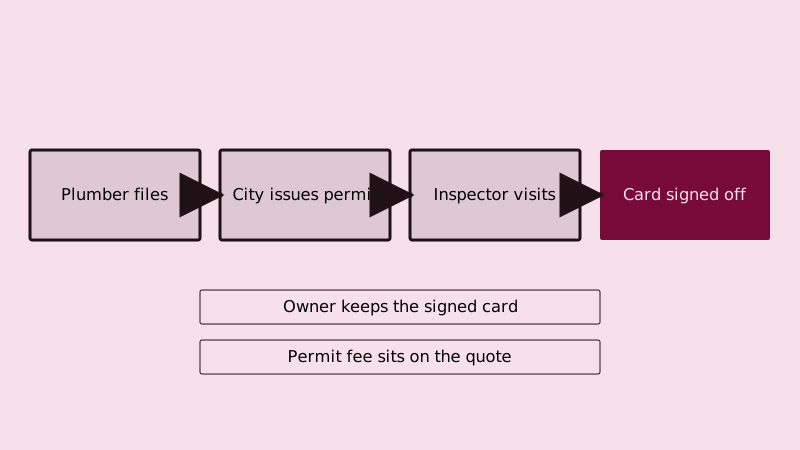
The installing plumber applies, and the fee appears on the quote. California steers permitted work to contractors with a license, as it does once a job passes the $1,000 mark including parts. A few cities let owners take out permits for a house they live in, but gas and venting raise the stakes and the city decides.
If the quote never mentions a permit, ask. A suspiciously low price sometimes omits both permit and inspection, and the cost resurfaces when the house sells or an insurer investigates a claim.
When you request a price, ask for the permit, the straps, the valve piping and the old tank's removal as separate lines.
What if nobody pulls a permit?
The work may need to be opened up, corrected and inspected afterward, and some cities add fees for unpermitted work. It can also cause trouble with an insurer after a leak or fire, and it can come up at a sale. That is the whole reason permits exist.
An emergency swap on a cold morning is still a permitted job. Ask the plumber how the city handles an urgent replacement, because processes differ. Emergency water heater repair explains how urgent visits work.
How quickly does the permit come, and what does it cost?
A plain replacement can often be approved at the counter, and Pico Rivera's page says change-outs there can be. Fees belong to each city and get revised, so none is printed on this page. Ask for the fee as a separate line in your quote.
Inspection timing depends on the city's schedule. Ask the plumber when the inspector is expected and whether someone must be at the house. Keep the final signed permit card with your records, since you may need it when you sell.
When you compare prices, water heater replacement cost lists what drives the total, and tank vs tankless shows why a tankless swap adds permit complexity.
Common questions
Is a smaller repair permitted too?
Replacing the heater is. Smaller jobs, like an element or a thermostat, are treated differently from city to city, and parts such as the gas control or relief valve can be more sensitive. Phone your city's building office, using the table above, before assuming either way.
Will my homeowners insurer care?
It can. If a heater fails or causes damage, an insurer may ask who installed it and whether it was permitted. We cannot speak for any insurer, so check your policy wording. A permit and a signed inspection are simple proof that the job was done to code.
Does every heater need an expansion tank?
No. They are often needed on a closed plumbing system because heated water expands and raises pressure, but we would not call one required in every home. Your supply setup decides, and the installer or the inspector can tell you.
What happens if I replace a heater before selling?
A buyer's inspector may check the straps, the release valve and whether a permit record exists. In California the seller of real property with a water heater must certify that the bracing law has been followed. A permitted, inspected replacement with the permit card in hand makes that simpler.
Can an urgent swap happen the same day?
Sometimes. An installer may move quickly and sort the paperwork around the visit, though parts and the city's process set the pace. Phone on a weekday, nine to five, or send the form and we arrange the visit. Everything else we offer begins at the home page.
References
- City of Whittier Building and Safety Division
- City of Pico Rivera, permit FAQ (express permit for water heater change-out)
- City of Pico Rivera Building and Safety
- City of La Habra Heights Building and Safety
- City of Cerritos Planning and Building Permits
- City of Bellflower Building and Safety
- City of Paramount Building and Safety
- City of Downey Building and Safety Division
- City of Norwalk Building and Safety
- City of Santa Fe Springs Building
- LA County Public Works Building and Safety FAQ (La Mirada and Hacienda Heights)
- California Health and Safety Code 19211, water heater bracing
- California Contractors State License Board