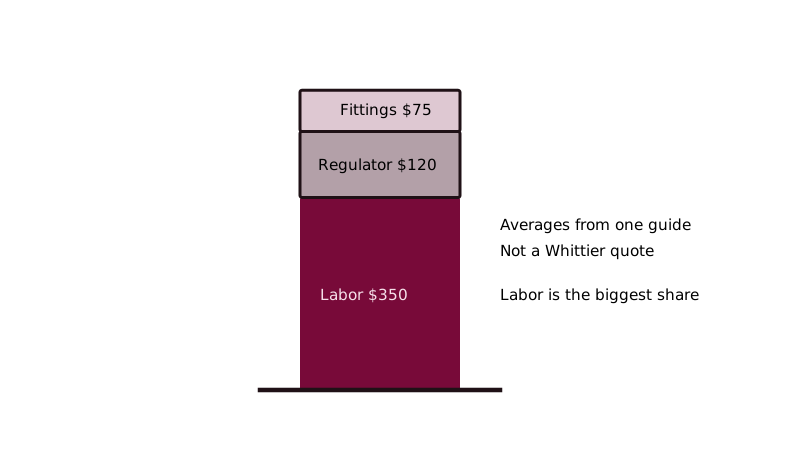
Expect a total of $200 to $900 for a standard installation, while complicated jobs reach around $1,200, according to one published cost guide. Take that as a ballpark, not a bid. Labor takes the biggest share, the part is small, and your pipe plus the access decide the rest. Unsure whether you need a regulator at all? Begin with the low water pressure overview.
How much is a pressure regulator for water, parts alone?
The regulator body itself is the cheap part. The same guide lists units from about $40 at the low end to about $260 at the high end, with an average near $120. Fittings and valves that go with it run roughly $20 to $200, averaging around $75. Buying the part yourself saves little compared with labor.
Why the spread? Size and build. A three-quarter-inch regulator costs somewhere between $20 and $100 more than a half-inch one in that guide, and a brass body or higher flow capacity pushes the price up. Where your supply line is a different material, the plumber may need transition fittings to connect it, and those are extra.
Ask what model is being fitted and whether its printed pressure range suits your house.
What will labor add to the bill?
Labor in the guide runs from $150 to $700, averaging $350, for a job of about two to four hours. That is consistent with separate published plumber rates of $75 to $150 per hour. An easy exchange on a reachable line lands low; a first installation with new piping lands high.
Cost table, as published (national guide figures, not a Whittier quote):
| Item | Low | Average | High |
|---|---|---|---|
| Labor | $150 | $350 | $700 |
| Regulator unit | $40 | $120 | $260 |
| Fittings and valves | $20 | $75 | $200 |
| Permit (if required) | $0 | n/a | $200 |
| Diagnosis or prep | $0 | n/a | $150 |
A table like this will not sum to a single figure, because few jobs hit every line at its maximum. Most homes land between $200 and $900 all in.
What moves the price of the job?
Four things count most: the reach to your main line, the pipe size and material, any permit, and whether the old valve is leaking or seized. Home size also counts, since larger or multi-story homes can add roughly 10 to 25 percent according to the guide.
Details worth knowing:
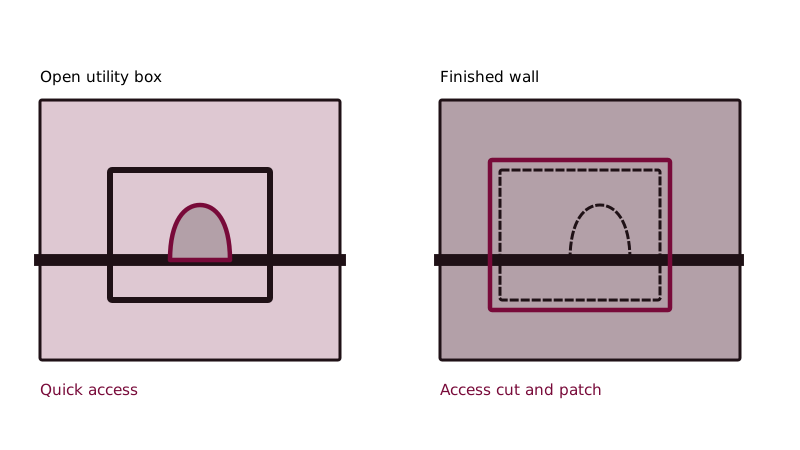
- Access. A regulator in an open utility box goes quickly; one tucked behind a finished wall or a planter does not.
- Region. The guide suggests adding about 5 to 15 percent for higher-labor coastal metros. Whittier is inland, so ask for a local figure instead.
- Permit. Ask the plumber whether your swap needs one. The City of Whittier Building and Safety Division, (562) 567-9320, can say. If a permit applies, the fee is a line on your quote.
- Condition of the old part. A regulator that has seized, corroded fittings and an old shutoff that will not close all add time.
What about replacing a regulator that has already failed?
A straight replacement tends to fall in the lower half of that spread, because the connections already exist. Out comes the old body, in goes the new one, and the pressure gets set. The same $200 to $900 frame applies, though a stuck shutoff or a missing union can add hours.
Have unions put in on either side so a later swap is simple. Ask too whether the job covers gauge readings before and after, and whether the final setting stays under the 80 psi limit in the California Plumbing Code, section 608.2. Plenty of homes run well under it.
A healthy valve with weak flow downstream means a new one changes nothing. Why water pressure drops is worth reading before you pay for the wrong repair.
Should I be worried about a quote that looks too low or too high?
Compare quotes line by line. A very low price may leave out the permit, fittings or a pressure test. A very high one may bundle repiping or a new shutoff. Ask what the price covers, what it omits, and who pays if surprises turn up behind the wall.
A sound written quote lists the regulator model, labor, fittings, any permit and the gauge check. Hourly pricing and call-out fees are broken down in plumber rates by the hour. If your regulator is simply set wrong, adjusting the valve yourself may cost nothing.
When is the extra spending worth it?
High pressure damages things quietly: hoses, valves, toilet fill assemblies and water heater parts. Paying a few hundred for a sound regulator can shield much costlier fixtures. A gauge above 80 psi, or pipes that bang, makes it money well spent.
A regulator can turn a house into a closed system, where warming water has no room to expand, so a small expansion tank is often needed. Have the plumber look at both items in one visit. See also what water hammer sounds like.
How do I get a firm price?
Send a short description through the price request form: the size of the house, where the main sits, and any gauge reading. Someone local then comes out in Whittier or a neighboring city, inspects the line, and hands you a written price beforehand. Photos of the valve area help.
See the full list of jobs on the Rio Hondo Plumbing front page.
Common questions
Is the water pressure regulator cost lower if I buy the part?
Only a little. Published guides list units at about $40 to $260, and labor is the bigger share of the bill. Some plumbers also hesitate over parts they did not bring, so ask before you shop. The wrong size wastes time as well.
How long do these valves usually last?
No calendar applies. Springs tire, diaphragms crack, and grit from hard water can foul the seat, so test the pressure whenever it swings or the gauge creeps up overnight. Most replacements follow a failure, not a schedule, and that is also when people discover the valve was due.
Does a regulator installation need a permit in Whittier?
It can, depending on the work. Phone Whittier's Building and Safety Division, (562) 567-9320, and describe the work. The cost guide used here puts permit fees at $0 to $200 depending on local rules. A plumber who pulls permits will show the fee as its own line.
Will swapping the regulator fix weak flow?
Not when the old one still works. Weak flow can come from clogged pipes, a half-closed valve, or scale inside old galvanized lines. A quick gauge reading shows whether pressure is high, low or normal before any money is spent.
Why do two quotes differ so much?
Scope and access, mostly. One plumber may price the valve alone while another includes a new shutoff, unions and a pressure test. Line the items up, ask what each covers, and confirm both assume the same pipe size, the same permit and the same testing.
References
- Published cost guide, Current Cost (water pressure regulator installation), read November 2026
- Published plumber rate guide, ServiceOrca
- California Plumbing Code, section 608.2 (80 psi limit)
- City of Whittier Building and Safety Division