In Bob Vila's survey, a water softener install can run anywhere from $200 to $6,000, centered on $1,500. Whole-house systems sit in the middle and upper part of that spread, and labor alone runs $150 to $1,000. Hardness in this area is high enough that the question is real, so this guide compares prices with the readings. Choosing the right type is a water softener installation question.
What is the installed price of a whole-house softener?
By type, in Bob Vila's table: salt-based ion exchange units run $500 to $3,000, salt-free systems $800 to $4,000, and dual-tank systems $1,000 to $5,000, with installation included in those figures. Under-counter units cost about $150 to $600 and are not whole-house.
The wide spread comes from capacity, brand, features and house layout. A larger family or harder water needs a larger tank, and a self-cleaning feature adds $300 to $1,000. Labor for a whole-house install is $150 to $1,000, higher if new pipe must be run. Ask for a quote on paper naming the model, capacity and each extra. Published prices only frame the conversation.
What drives a softener quote up?
Capacity, type and plumbing work. A unit must sit near the water main so every tap gets treated water, and if that spot is far from a drain or an outlet, trenching or new lines cost more. Trenching a new line adds roughly 50 cents to a dollar a foot, according to the guide, and bringing power to the unit about $3 to $5 per square foot.
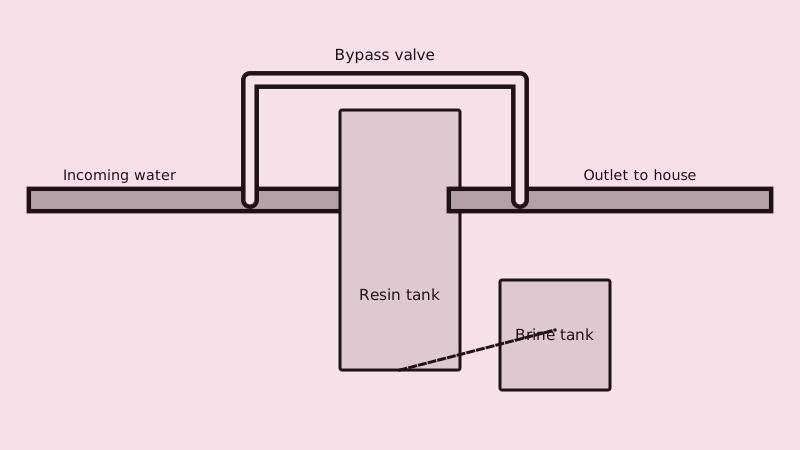
Location also matters. Urban areas generally have higher labor and material rates than rural ones, and tight garages or crawlspaces take longer. Check that the quote counts a bypass valve, a drain line and a brine line. The drain is explained in softener drain line installation, and the sequence of steps in installing a water softener.
How hard is the water around Whittier?
The City of Whittier's 2025 report gives total hardness of 250 mg/L on average, near 14.6 grains per gallon. Golden State Water's Norwalk system averaged 310 mg/L (18 grains) and its Artesia system 191 mg/L (11 grains). La Habra Heights County Water District reported 309.8 mg/L (18.1 grains) for 2023, and Pico Rivera's 2023 report shows 174.4 mg/L.
Those are system averages. Several cities here have more than one supplier, so your street may differ. We did not verify readings for Hacienda Heights, Bellflower or Hawaiian Gardens, and a grain per gallon converts at 17.1 mg/L. Request the newest report from your supplier before sizing a unit; the Norwalk area page has supplier notes.
What are the running costs?
Salt for a salt-based unit costs $5 to $10 for a 40-pound bag and is replaced every few months, according to Bob Vila. Annual maintenance is listed at $100 to $300, and potassium replacement for salt-free units at $50 to $70. If you rent instead of buying, expect $25 to $50 a month.
Regeneration uses some water, so a bill may rise slightly; that question has its own page, softeners and the water bill. The payoff is less scale on heaters, fixtures and appliances, for the scale side, read about preventing scale from hard water and removing scale.
Salt-based or salt-free?
In an ion exchange unit, calcium and magnesium are swapped out for sodium or potassium; that swap is the softening. A salt-free system conditions the water so scale forms less readily without removing minerals. Your pick depends on goals, budget and local rules.
Before buying a salt-based unit, ask your city or water supplier whether any local rules touch softener discharge. Prices by type are listed above, and the plumbing is explained in salt-based softener installation. If your goal is drinking water quality rather than softness, a softener is the wrong tool.
How large should the softener be?
Size follows the hardness you must remove daily: grains per gallon times gallons used. As an illustration only, 14.6 grains times 300 gallons a day comes to roughly 4,400 grains. A tank sized for that regenerates every few days. A plumber or dealer can size one from your water report and household.
Too big wastes salt and money; too small lets hard water through between regenerations. Have the quote list grain capacity, regeneration method and the hardness it assumed. If your supplier changes sources, as some cities in this area do, hardness can shift, and a smart or metered unit adjusts better than a timer.
What happens on installation day?
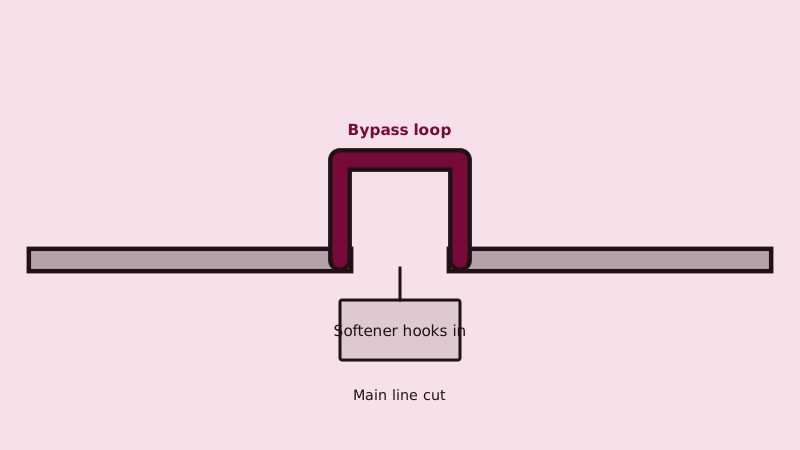
Water goes off, the main line is cut and fitted with a bypass, the inlet and outlet connect, a drain line carries regeneration water away, power is plugged in and the control head is programmed. Then the system is flushed and tested. The guide's labor range is $150 to $1,000.
Permits vary by city, and changes to a main line are normally permit work, so ask who handles it; Whittier's Building & Safety Division is at (562) 567-9320. The state licensing threshold is $1,000 of work; you can check any contractor on the CSLB site. A written quote starts at the price request form, while the home page shows other jobs we set up.
Common questions
How many hours will the install need?
A few hours is normal when the water main, the drain and a power point sit close together. Longer runs, trenching or electrical work add more. Water is off during the tie-in, and a first regeneration cycle follows startup. Ask for the timing in writing.
What should I put on my list of questions?
Find out the model and capacity, the hardness assumed in sizing, whether drain, bypass and electrical work are inside the price, what the warranty covers, and the yearly salt and service bill. Note the license number and look it up first.
Does somebody need to be home?
Yes. An adult shows the main shutoff, agrees where the unit will sit and approves the work. The water will be off for several hours. When nobody can attend, give a stand-in's name in the request, and keep the space near the main clear so the unit can be placed.
Will a softener fix all my water problems?
No. A softener addresses hardness. It does not remove chlorine, lead, bacteria or most other contaminants. If you have another concern, check your water supplier's report or have your water tested, and consider a separate filter. A softener will not change water pressure.