Scale is calcium carbonate. Vinegar, being a mild acid, breaks it down, and so does citric acid. Soak the fixture, wait, then wipe and rinse. Delicate or natural surfaces need gentler handling, and keep vinegar and bleach apart. For a lasting solution rather than a cleanup, the softener installation page covers treating the water; to start a visit request, use the home page.
What dissolves scale safely?
White vinegar and citric acid are the usual first choices, because both dissolve calcium carbonate without much hazard when used as directed. Commercial lime and rust removers work faster but are stronger, so read the label for which surfaces they suit. Use gloves, ventilate the room and rinse thoroughly afterward.
A quick reference on what to use where:
| Surface | Usually safe | Avoid |
|---|---|---|
| Chrome faucets and showerheads | Vinegar soak, 30 to 60 minutes | Abrasive pads |
| Glass shower doors | Vinegar spray, then a soft cloth | Metal scrapers on coated glass |
| Kettles and coffee makers | Vinegar or citric acid, per the maker | Harsh cleaners on interiors |
| Toilet bowls | Vinegar or toilet-safe descaler | Mixing with bleach |
| Marble, travertine, natural stone | Neutral stone cleaner | Any acid, including vinegar |
| Brass, nickel or coated finishes | Gentle soak, short time | Long soaks that dull the finish |
One firm rule: vinegar and chlorine products must not meet, because chlorine gas can result.
How do you get scale off faucets and showerheads?
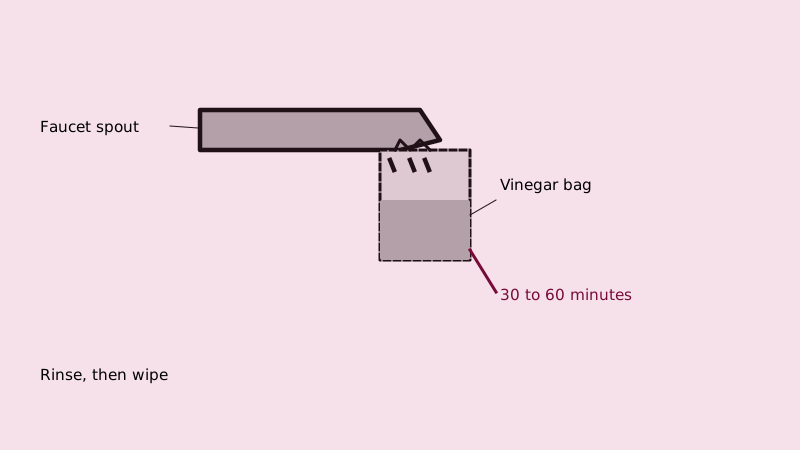
Half-fill a plastic bag with white vinegar and fasten it so the scaly end sits in the liquid. Thirty to sixty minutes is typically enough. Then brush with an old toothbrush, wipe and rinse. Unscrew an aerator or showerhead that is badly clogged and soak it in a bowl instead. Poke clogged holes clear with a pin.
Stop checking the time on a coated or brass finish after the first 30 minutes, since long exposure can dull it. If a fixture is crusted so heavily that the flow has fallen off, replacement may be quicker than cleaning. Weak flow often comes from a clogged aerator, so also see low pressure at a sink; a dripping spout is handled in leaky sink faucet repair.
What works on glass, tile and a toilet bowl?
Spray warm white vinegar on shower glass, let it sit 10 to 15 minutes, then wipe with a soft cloth; repeat for thick film. On tile and grout, test a hidden spot first, because acid can etch some grout and stone. For a toilet, pour vinegar into the bowl, wait an hour, brush and flush.
Hard water rings in a toilet are usually mineral deposits rather than dirt. Pumice stones made for toilets work on stubborn rings without scratching porcelain when used wet, but only on porcelain. Never use them on a tub or tile with a glazed surface you want to keep. If a toilet runs or leaks around scale at a valve, see toilet repair.
How do you remove scale from a water heater?
Inside the tank, flushing does the work, not scrubbing. Kill the power or gas supply, shut the cold inlet and run a hose from the drain valve to a drain that can take hot water. Then and crack a hot tap indoors to admit air. Keep flushing with cold water until it runs clear; heavy sediment can take several rounds.
Let the water cool first, since it scalds. A drain valve that clogs and only dribbles is a cue to stop and hand over to a plumber. Rumbling, slow heating or a tripping limit switch suggests scale. A caked electric element usually needs replacing; read element replacement and heater service. On an old tank with heavy sediment, a new heater may beat repeated flushing.
What about tankless heaters and dishwashers?
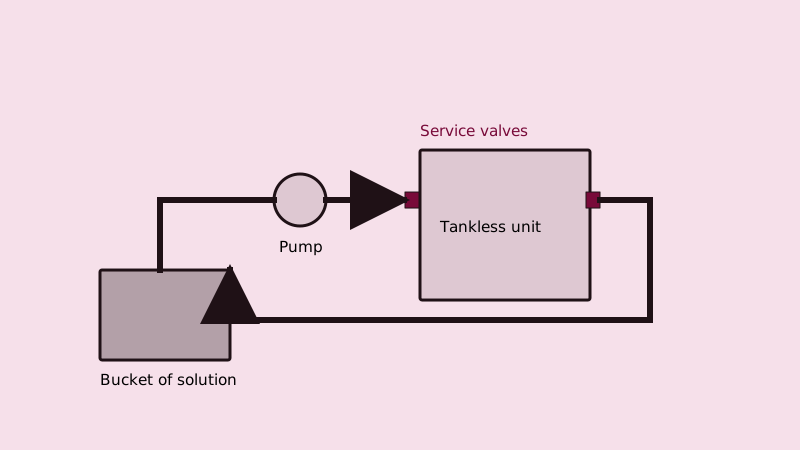
Scale builds on a tankless unit's heat exchanger, and the maker prescribes a descaling routine, typically a vinegar or approved solution pumped through through the service valves. The manual comes first, or a contractor, because gas and warranties are involved. Dishwashers and coffee makers carry their own cleaning cycles.
Whittier's hard water, about 250 mg/L total hardness in the 2025 city report, means tankless units may need this done regularly. Skipping it lowers hot water output and can trigger error codes. For related service, see tankless water heater repair.
Does scale inside the pipes come out too?
Not dependably. Household remedies cannot dissolve scale along a long pipe run, and strong chemicals risk the pipe itself. When several fixtures lose pressure, a plumber can test whether the bore has narrowed; in galvanized or crusted lines, replacement is the durable answer, and a softener protects the new pipe.
Pipe trouble, rather than a fixture problem, looks like weak flow at every tap, reddish or flaky water and normal pressure at the meter. The steel version is in galvanized pipe replacement. To weigh treatment, check softener installation pricing, and upkeep belongs to stopping scale before it forms.
Which jobs belong to a professional?
A heater that will not drain, pressure down across the house, a fixture crusted onto its supply line or leaks around mineral deposits are all signals. Get a license number from the contractor, check it on cslb.ca.gov and keep the estimate in writing.
A heater replacement is permitted work, and California reserves that for contractors with a license. A plumber can also measure your hardness before and after a softener goes in. Visits are requested through the price form.
Common questions
What soak time works for a showerhead?
Thirty to sixty minutes is usually enough for light scale, and a few hours or overnight can help heavy buildup on plain plastic or chrome. Skip long soaks on brass, nickel and coated finishes, since acid can dull them. Rinse well, then run the shower to flush loosened bits out of the holes.
Can I use vinegar on every surface?
No. Vinegar can etch marble, travertine and natural stone, and it can dull some metal finishes and wear rubber seals if left on. Use a neutral cleaner on stone. Always test a hidden spot, wipe it off promptly and keep vinegar and bleach apart.
Can I flush the heater without a plumber?
Many homeowners do. Follow the label, cut power or gas first, let the water cool and route the hose to a safe drain. Leave gas piping alone, and if the valve will not open or drips after closing, stop and phone a plumber.
Will descaling extend the heater's life?
Possibly. Scale insulates the heat source and wastes energy, and flushing takes sediment out. An aging tank can leak however clean it is. No verified figure exists for added years, so I am not giving one, and results vary by tank.
Why does the scale come back so fast?
Because the water keeps delivering minerals. Whittier's city water averages about 250 mg/L, on the USGS scale's very hard band, so scale returns wherever heat or evaporation occurs. Cleaning treats the symptom, while a softener or similar treatment addresses the supply. Wiping surfaces dry after use slows the return.