Begin at the meter; it does not lie about flow. Close every tap, idle every appliance, write down the dial reading and keep hands off the plumbing for a couple of hours before checking again. A moving number means water is escaping from the plumbing although the house looks dry. An unchanged one means the usage is genuine or the bill has another cause. That same opening move is the start of the broader leaks and burst pipes guide.
Is there a way to confirm a hidden leak before I call anyone?
Use the water meter itself. The EPA's approach: copy down the dial numbers, keep every fixture untouched for around two hours, and compare. If the numbers differ, you have a leak. Most meters carry a little flow indicator, a triangle or tiny dial, which spins whenever even a trickle passes.
To keep the test honest:
- Pause the washer, dishwasher, ice maker and sprinkler timers.
- Nobody flushes or opens a tap.
- Snap a photo of the dials.
- Return after two hours, or the next morning, and shoot the dials again.
- A flow indicator still turning while everything is off signals a leak well before the two hours end.
The meter box is generally at the curb or along the property's front edge. Open the lid gingerly, because spiders like the shade. If it is nowhere to be found, ask your water supplier.
Where do hidden leaks usually hide?
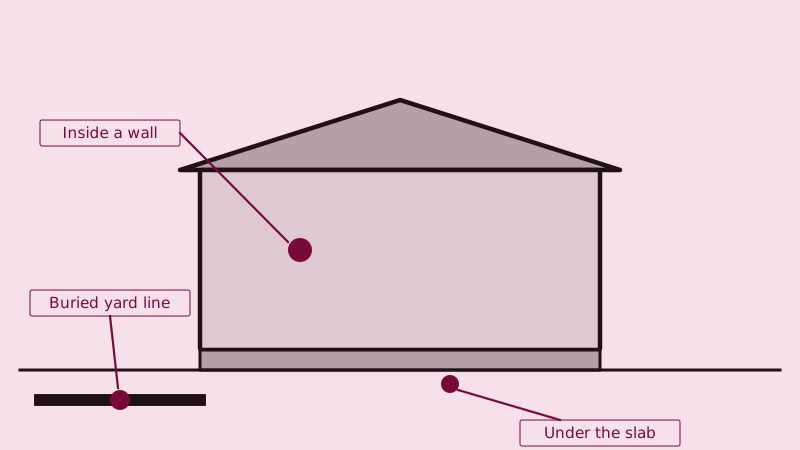
Toilets, irrigation lines, the water heater, buried service lines and pipes beneath a slab. Toilets head the list for silent waste. Irrigation breaks vanish under lawn and planting beds. A buried line to a hose bib or pool can leak for months with no puddle.
Check them cheapest first:
- Toilets. Tint the tank water with dye and give it ten minutes untouched. Color in the bowl exposes a leaking flapper, and the remedy appears in toilet flush repair as well as stopping a running toilet.
- Faucets and showerheads. Drips every second waste thousands of gallons in twelve months, as leaky faucets and the water bill shows.
- Irrigation. Run each zone and walk it, hunting for soggy patches, little geysers or oddly green strips.
- Water heater. Look at the relief valve's drain pipe and at the floor around the tank for dampness.
- The service line. Underground, between curb and foundation, a pipe can seep for months unnoticed.
Is the leak hiding behind drywall or beneath the concrete?
Yes. Aging lines under a slab can corrode and seep into the soil, while a wall leak can drip for weeks out of sight. Warning signs include warmth underfoot in one spot, water sounds in a silent house, damp baseboards, musty air, mold, hairline cracks and a bill that creeps upward.
Postwar construction is common here: Census estimates give 1957 to 1959 as the median build year in Downey, Norwalk and Pico Rivera, so decades of wear on copper or galvanized lines are plausible. A hot-line slab leak often announces itself as a warm spot. If that sounds familiar, try slab leak repair or repipe, then slab leak repair costs. Wet ceilings are another case, handled in ceiling water leaks.
Which non-leak reasons push a bill up?
Extra use, a longer billing cycle, an estimated read, a rate hike, a new appliance, a pool top-up, heavy summer sprinklers, or a misreading meter. The EPA gives a yardstick for winter: a household of four past 12,000 gallons in one month could be leaking badly.
Study the bill itself:
- Put units, not dollars, side by side with last year's same month.
- Look for an "estimated" read.
- Spot any new fee or a rate change.
- Count the days covered.
- Remember houseguests, a new baby, a new washer or a changed routine.
A rise in use with a clean meter test is a reason to ask the supplier for a fresh read or a meter check. City of Whittier water customers can phone the city's water customer service at (562) 567-9530; and since other suppliers cover pockets of the area, the name printed on your bill identifies yours.
Could the toilet really be the cause?
Often. A toilet with a flapper that does not seal can run silently for days, and a worn flapper can leak day and night without a sound. Dye testing needs only ten minutes per toilet, so do each one; color appearing in a bowl means you have found it.
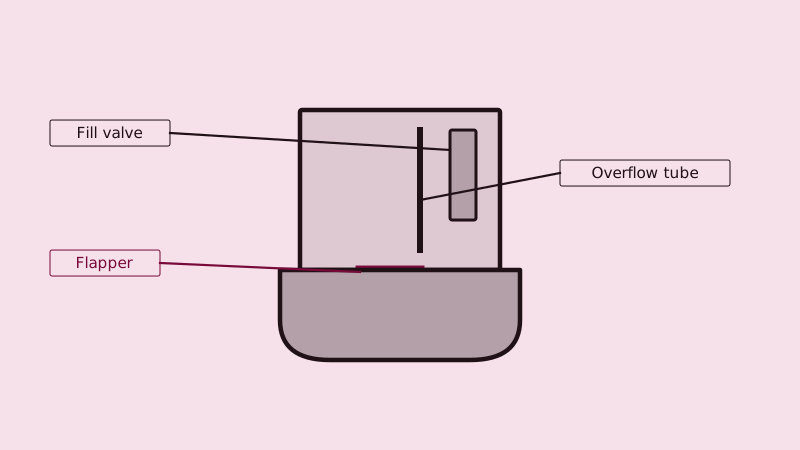
Use your ears as well. A soft hiss, or a tank that refills by itself every so often, means water is slipping past. A worn fill valve, or an overflow tube adjusted too high, will do it too, and overflow tube repair covers that.
When does paying for leak detection make sense?
When the meter says water is moving and toilets, faucets and irrigation have all come up clean. Instead of ripping out walls, plumbers trace hidden leaks using acoustic listening equipment, moisture meters and thermal cameras, and locating the spot first keeps the opening small.
What the service costs is on the leak detection price page, while reasons a bill climbs widens the list. Should the culprit be a failed pipe, pipe burst causes explain why, and burst pipe water damage covers cleanup. The insurance side sits in slab leak coverage.
How do I arrange a hunt for the leak?
Send both meter readings, the hours between them and a note of what you have already ruled out with the price request form. Someone from the area visits your Whittier or nearby address, then a quote on paper arrives before the job starts. A photo of the bill and one of the meter will help.
See the home page for other services.
Common questions
How can my bill double when nothing is wet?
Easily. A running toilet, a buried irrigation break or a leaking service line can lose hundreds of gallons daily without anything visible at ground level. That is why a meter test counts for more than hunting for puddles, and why it should come first.
How long does the meter test need?
The EPA suggests two hours of zero use, and an overnight stretch gives a stronger result. Keep ice makers, softeners and automatic sprinklers quiet during the test as well, since any of them can move the dial. A flow indicator that keeps spinning is itself a sign of a leak.
Who repairs a leak on my own property?
Typically the supplier maintains everything up to the meter, while the owner owns the problem from the meter onward to the house. Ask the supplier exactly where the boundary falls. Work on the owner's side belongs to a plumber, and that visit can confirm where the leak sits.
Can a leak in the walls cause mold?
It can. Water that keeps wetting drywall or framing can support mold in days to weeks. A musty smell, stains or soft spots are reasons to act: close the valve feeding that area and have a plumber track down the source.
Will an insurer cover a hidden leak?
Sudden damage is often covered, whereas slow or long-term leakage and ordinary wear may not be, and the pipe itself can be excluded. Policy wording varies; go through yours and phone the insurer ahead of repairs. Dated photos and meter readings support a claim.