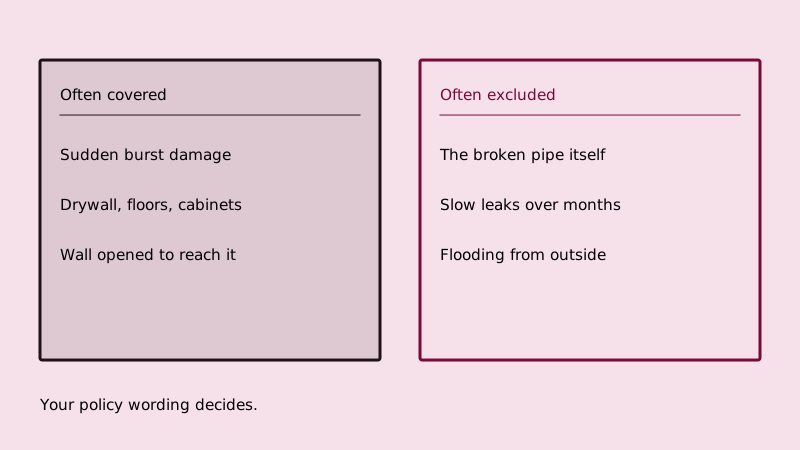
A sudden, accidental burst is a covered loss under many standard homeowners policies, which pay for what the water ruined, like drywall and floors. The broken pipe and anything that seeped slowly over weeks tend to be left out. Your own policy wording decides. For the plumbing side, see how local plumbers handle leaks and burst pipes.
In what situations does a policy pay out for a burst pipe?
Coverage usually turns on the word sudden. A pipe that splits overnight and floods the kitchen fits that picture, and the resulting damage to walls, flooring, cabinets and belongings is commonly covered, after your deductible. A policy may also pay for tearing out part of a wall to reach the break.
None of that is certain. Open the declarations page and the water section, or ask your agent which perils apply, because limits, deductibles and endorsements differ between insurers. What follows is general background and not a view on your claim. If a claim goes badly, the California Department of Insurance offers consumer guides and a complaints channel for policyholders.
Does an older home change the odds of a claim?
It can shape the questions an adjuster asks. Many homes near Whittier were built in the postwar years. Census data puts the median build year at 1959 in Downey and 1957 in Norwalk and Pico Rivera, so galvanized and early copper lines are not unusual. A pipe that corroded over years may be viewed as wear, not a sudden failure.
Regular upkeep helps your case. A record of inspections, a pressure check and repairs shows the home was cared for. Our pieces on what causes pipes to burst and burst pipe prevention explain what protects a house. A leak check from a plumber can also be useful, as in leak detection cost.
What do insurers usually refuse to pay for?
Three exclusions recur: the broken pipe, harm from a long-running leak, and floodwater arriving from outside. A weep behind a wall that ran for months reads as wear or neglect rather than a sudden accident, and a claim for it may be turned down.
Mold is the usual aftershock. Policies often limit or exclude it, particularly when it follows slow moisture. Moisture guidance from EPA calls for drying wet materials fast, in a day or two, and that is one reason speed matters. Earthquake damage is generally a separate policy in California, which means a line cracked by a quake could sit outside an ordinary policy.
Will the plumber's report help my claim?
Often it does. A short written description of the failed part, where it broke and what caused it gives the adjuster something concrete. Words like sudden failure, corrosion, a defective fitting or worn connector help the insurer sort the loss. A plumber describes what they see but does not decide coverage.
Ask for a written invoice that itemizes the repair, and for a note on the cause if the plumber is willing. Expect a written quote before anything happens at the property. If your policy requires a specific repair process or approved vendors, check that before work starts, unless the water must be stopped at once.
How does it work for tenants and condo owners?
A renter's own policy covers belongings, and sometimes living expenses, but not the building. The landlord's policy covers the structure. Report a burst in writing right away. Condo owners often hold an interior policy that covers what is inside the unit, while the association's policy covers shared structure, which is why pipe ownership counts.
Who owns the pipe decides who files. Pipes inside the walls of your unit may be yours, and a riser serving several units usually belongs to the association. Check your governing documents, and ask the property manager before hiring anyone. The page on water damage from burst pipes lays out the damage and drying side.
How big is a typical loss, and how does that affect the claim?
Bob Vila puts the leak repair itself at $150 to $450, and says cleanup and repairs together typically run $1,000 to $4,000, while water damage restoration can reach $1,000 to $5,000. When the damage sits close to your deductible, filing may not pay. A larger flood usually is.
Think about the long game as well. Claims can influence renewal and premiums. Ask your agent how an inquiry differs from a filed claim. Do not guess. Collect two or three repair estimates so you know the scale before you decide.
Which comes first, the insurer or the plumber?
Stopping the water comes before either call. Shut the house valve, kill power to damp rooms and photograph the scene before any cleanup. After that, open a claim with the insurer and book a plumber to end the leak. Policies expect you to protect the home from further damage, so reasonable emergency steps are usually fair to take.
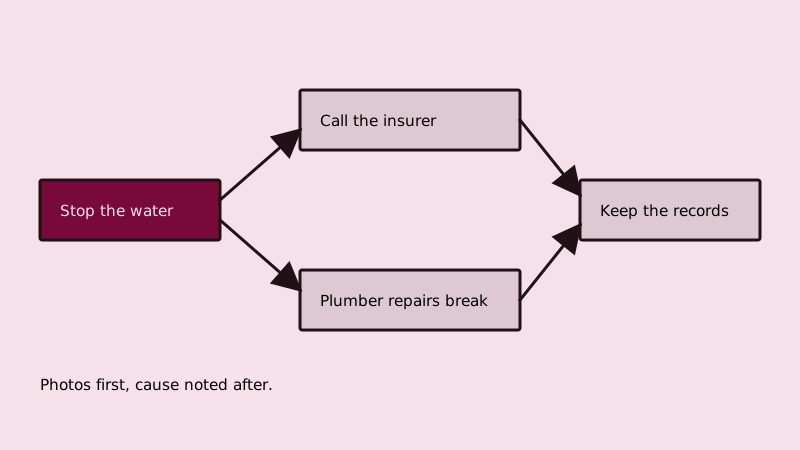
A tidy order helps:
- Close the water and cut power near wet zones.
- Take photos and a slow video of each room, the pipe and the source.
- Keep the broken piece of pipe if you can.
- Call the insurer and note the claim number, date and name.
- Have the plumber repair the break and write down what failed and why.
- Save receipts for drying, repair and hotel nights.
Our guide to the first steps after a burst covers the plumbing end in more detail.
Common questions
Would a leak under the slab be paid for?
Occasionally. A leak beneath the concrete turns on policy wording and cause, and some policies pay for resulting damage while refusing the cost of getting at the pipe. Our write-up on slab leak coverage goes further, and the insurer should hear about it before work starts.
Is a frozen pipe treated differently?
Some policies cover freeze bursts when you kept the heat on or took reasonable care. Southern California rarely has hard freezes, but a cold snap can freeze exposed lines. The adjuster may ask whether the house was occupied and heated. Cause matters, and the details sit in the policy.
Should I wait for the adjuster before repairing?
Stop the water and prevent further damage first, then document. Hold off on tearing out finished materials, within reason, until the adjuster has a chance to see them or has agreed to your photos. Emergency drying and repairs to stop the flow are usually expected.
Who do I call about the plumbing?
Tell us where the water came from, what it damaged and when it happened, using the price request page. A local plumber follows, with a written quote ahead of the work. Ask afterward for an invoice that names the cause of failure.
The rest of our guides start from the plumber guide for Whittier.