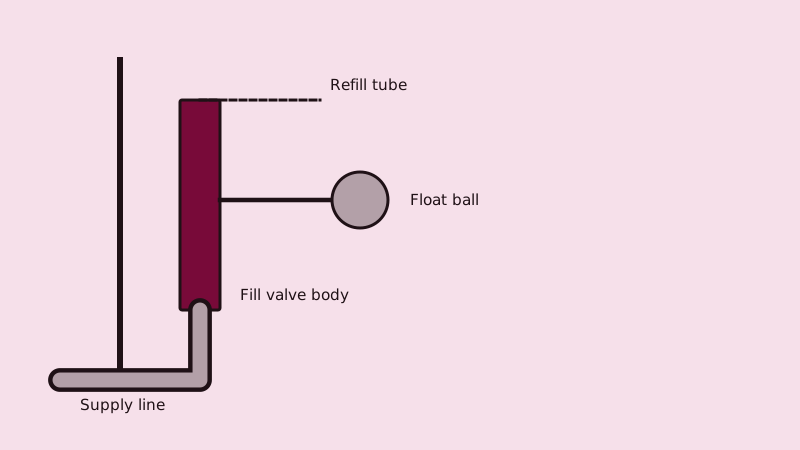
Pop the tank lid and the fill valve is the slim tower standing on one side, usually the left. Its job is to replenish the reservoir once you flush, then close when its float climbs. If it sticks or leaks, the tank never stops filling. Replacing it needs basic hand tools, and other fixes for the fixture sit under toilets.
Is the fill valve really the culprit?
Look for a hiss after flushing, a tank that refills at a crawl, water trickling down the overflow tube or a valve that shuts off late. A leaky flapper acts differently. Water creeps out of the tank and slides into the bowl by the cupful, and the valve wakes every so often to compensate.
Stand and watch the open tank for a minute. A steady stream down the overflow standpipe means the valve is not closing, or its float sits too high. A normal tank level with a bowl that keeps refilling points at the flapper instead. Dye settles it: per EPA, a little dye goes into the tank, the flush handle stays alone for ten minutes, and any tint reaching the bowl proves a leak.
Water chemistry plays a part. Whittier's city system averaged 250 mg/L total hardness in the 2025 report, and mineral crust can foul the small seat inside a valve, though the effect depends on which supplier serves your street.
How is the old valve taken out and a new one fitted?
Shut the stop under the tank, flush, mop the last water out with a sponge, back the supply line off the tank's underside, loosen the big locknut and lift the old assembly free. Adjust the new unit to the proper height, hand-tighten its nut plus one extra quarter turn, reattach the line and wait while the tank fills.
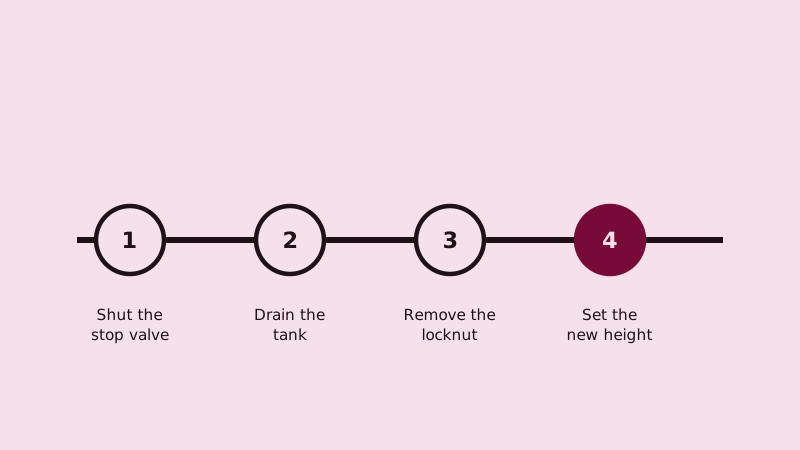
The sequence goes like this:
- Lay a towel and bucket underneath, since water stays in the lines.
- Note how high the old valve stood. Most new ones telescope, so the top should land about an inch above the overflow tube, as the package directions show.
- Fit the rubber shank washer on the underside, thread on the locknut finger-tight and stop there. Porcelain cracks when overtightened.
- Reconnect the supply with a braided flexible line. Swap it out if it looks aged, because old lines are a common burst point.
- Clip the slim refill hose to the lip of the standpipe so it empties inside. Push it down into the tube and tank water can siphon backward into the bowl.
- Open the water slowly, look for drips and tune the float until the level settles roughly an inch under the overflow's top.
An oddly shaped tank, or a nut that refuses to budge, is where a phone call beats persistence.
Should I change the flapper and its seal too?
Yes; it costs little and is frequently the real problem. EPA notes worn flappers can leak or cause a toilet to flush by itself, and advises a replacement no later than year five. Even a brand-new flapper leaks against a pitted or crusty seat.
Unhook the old flapper from its posts and take it along to match the style at the store. Leave the chain with about half an inch of play so it cannot hold the flapper open. Rub the seat with a wet rag. A few toilets also carry a rubber gasket where tank meets bowl, and that wears on its own timetable. Related walkthroughs: toilet flapper repair and changing a flush valve while the tank stays put.
If the tank still bleeds into the bowl after a fresh flapper, the seat is probably damaged or the whole flush valve is failing, and a complete flush valve kit becomes the answer.
Can one running toilet inflate my bill?
It can, and silently. Water leaking from tank to bowl runs day and night and surfaces only on the statement. EPA counts a typical home's leakage at over 9,300 gallons yearly, with toilets a familiar source. How much yours costs depends on how fast it leaks and on your provider's rates.
Suspect the toilet if the bill jumped. Write down the meter, keep every fixture idle through a two-hour wait, then check; a dial that crept forward means water is escaping. For the rest of the checklist, see high water bill causes, and for a neighboring fix see stopping a bowl that runs.
What happens if the toilet's supply line gives way?
Twist the small wall valve below the tank clockwise. When it is stuck or weeping, go to the house's main shutoff instead. A failed connector can flood a bathroom within minutes, and braided lines with corroded fittings are a known weak point, so act first and mop afterward.
Dry the floor with fans, and photograph everything for your records. A fresh braided line replaces the old one, and a seized wall valve should go too, which the toilet shutoff valve guide describes. If the failure is in the wall pipe itself, see a burst water pipe and ask for help.
Cracked porcelain is a different story. No valve repairs it, and the toilet itself has to be replaced.
Which problems call for a plumber instead?
Ask for one when the stop will not turn off, the supply nut is seized or corroded, the porcelain is cracked, water seeps around the base, or a replacement valve has not cured the trouble. All of these go beyond a part swap.
Put a short description and a photo of the tank and stop valve on the price request form. We have someone local price the visit, and the number reaches you in writing beforehand.
Common questions
Is this a quick job?
Most owners finish in thirty to sixty minutes including the store run, quicker when the wall valve closes tightly and the nuts turn freely. A frozen nut or aged shutoff adds time. Let the tank refill afterward and keep an eye out for slow drips over the following hour.
What should I confirm before paying for toilet work?
See that the part is included, whether a worn supply line and shutoff will be replaced too, what minimum charge applies and whether the repair is warrantied. For larger jobs, verify the contractor license through the CSLB and get the number written down.
Must an adult stay on site?
Plan on it: someone to lead the plumber to the stop valve, describe the symptoms and approve the work. Clear space beside the toilet and mention any other running or leaking fixtures, which can be inspected on the same trip.
Does a hiss always mean the fill valve?
Usually. Hissing means water enters the tank when it should not, because the valve is worn, dirty or set too high. A flapper leak makes the valve cycle on and off instead, and a leaking supply line hisses at the connection. Inspect the tank and the line to see which applies.
The rest of our guides start from plumber in Whittier.