Replacing or adding supply and drain pipe beneath a manufactured home is alteration work, and the state housing agency (HCD) says a permit comes before any alteration of a mobilehome. The job goes to a plumber who knows those rules, following the steps below. Read the permit section first, and when you are ready, a visit can be booked from the home page.
Is a permit required beneath a manufactured home?
For new or altered plumbing, generally yes. HCD's modifying-a-mobilehome page calls for a permit before any alteration work and names form HCD MH 415, with the MH 604 guidelines explaining when the form applies. A straight like-for-like repair may be treated differently, so ask the enforcing agency.
Enforcement differs by location, sometimes the state and sometimes a local building department, and HCD's page does not say which covers a particular park. Telephone HCD or the city building division first. Park operators may also demand approval before anyone touches park plumbing, so read your lease or ask the manager. No rule for a specific Whittier-area park was verified.
What should you check before and after the work?
Before: the permit, the license, the scope and the schedule. After: pressure at the fixtures, no drips under the home, the access panel clear, insulation and belly wrap restored, and paperwork filed. Keep the permit, invoice and any inspection sign-off. If the home's warranty or park rules matter to you, confirm those too.
Buying or renovating? A pre-purchase look is described in mobile home plumbing inspection. Heaters are priced under mobile home water heater replacement, and cold weather is covered in winterizing mobile home plumbing. To ask for a quote, use the price form.
Which pipe material is allowed?
The right material depends on the rules that apply to your home, and I could not verify an approved-materials list, so I will not name one as fact. Plumbers commonly use PEX, copper or CPVC for supply and ABS or PVC for drains in manufactured housing, but ask the enforcing agency and the home's manufacturer's instructions what is acceptable for yours.
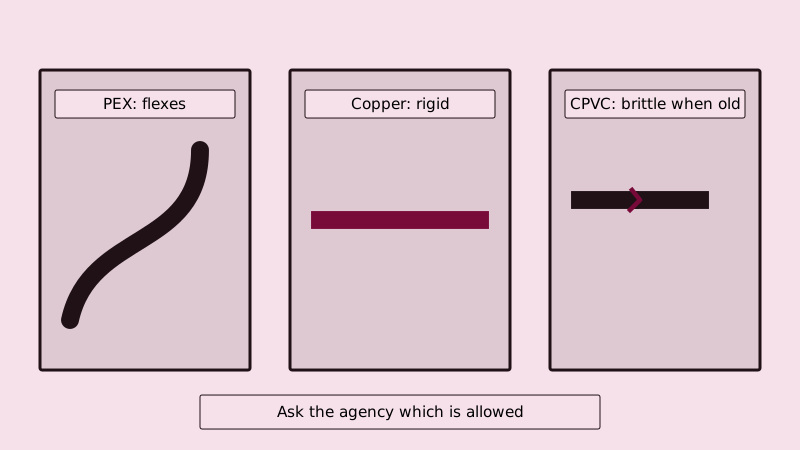
Considerations for choosing: PEX flexes and resists some freeze damage; copper lasts but can be pricey and pits in aggressive water; CPVC is brittle with age. For the pros and cons, see PEX versus copper. Whittier's city water is hard (about 250 mg/L total hardness in the 2025 report), which affects scale, though local water suppliers vary by address.
How do you spot an honest plumber, and a dodgy one?
Someone straight with you produces a license number along with a written scope and price, separates urgent items from deferrable ones and never rushes you to pay cash or sign today. The other kind avoids paperwork, wants the bulk of the money first or cannot show a license.
A few questions separate the two. What is included? What if the open belly shows more damage? Who files the permit? Fixed price or hourly rate? May I see the failed pipe? Specific answers are good signs. Collect two quotes, and judge ranges with what a plumber costs. The plumber service page explains how requests are handled.
What do the steps look like?
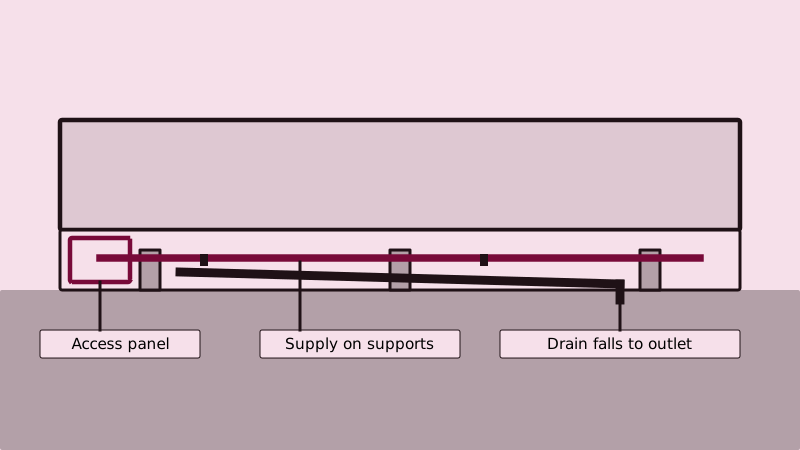
The contractor settles the permit path, drains the lines, cuts out damaged pipe, installs supply and drain pipe on supports, insulates where needed, pressure tests the supply and runs water through the drains looking for leaks. If the permit calls for an inspection, it comes next. The underbelly and skirting are then closed.
In order:
- Plan and permit. Sketch fixtures, pipe runs and connection points; submit what the agency asks for.
- Access. Open the belly wrap or the access panel. Keep any under-floor access panel unblocked, and confirm its required size with HCD or the enforcing agency for your home.
- Remove the old pipe. Water off, lines drained, old sections cut out.
- Install supply. New pipe with proper supports and no sags.
- Install drains. Slope matters: waste lines must fall toward the connection and be vented.
- Insulate and protect. Freezing is rare in Whittier, but heat, sun and rodents can damage exposed lines.
- Test. Pressure test the supply, fill the drains and look for drips.
- Close and inspect. Rewrap the belly, reinstall skirting and keep the access panel clear.
How do you find a reliable plumber for this work?
Begin with the license. California enforces its contractor license law from $1,000 in labor and materials and to anything needing a permit, and CSLB's website shows if a license is current, and under which classification. Ask about prior mobilehome plumbing under HCD or local rules, find out who takes out the permit and get the quote on paper.
Check these before you hire:
- License and classification. Plumbing sits under CSLB's C-36 classification. Look the number up at cslb.ca.gov.
- Mobilehome experience. Ask for examples of similar jobs and what the inspection involved.
- Written scope. Material, number of fixtures, connection points, restoration of belly and skirting.
- Permit plan. Who applies, who schedules the inspection.
- Payment terms. Anything over $500 needs a written contract, and deposits face a cap that CSLB can explain.
Common questions
How long does the job usually take?
A small repair can take a few hours, and replacing whole runs of supply and drain pipe a day or two, longer when the belly needs heavy repair or an inspection has to be booked. Request a timeline on paper that includes water-off periods and a plan for surprise damage.
What do I need answered before signing?
Collect a license number and ask whether they have previous manufactured-home work. Settle who files the permit, which materials go in, the written price and who restores the underbelly and skirting. Ask for photos of similar jobs, and how extra damage is handled so the final bill matches the quote.
Should I stay on site while it happens?
Be there for the start and for any inspection, so the shutoff, access panel and work area are confirmed in person. Stay reachable in case the open belly reveals damage. Renters in a park should warn the manager beforehand to avoid conflicts.
Can I do the work myself?
Small repairs may be possible, but alterations need a permit, and park rules may require approval first. A mistake in the drain slope, venting or supports leads to leaks and damage that is hard to see. Gas lines and anything under permit are for a contractor. When in doubt, ask HCD or the local building division.
What changes if I rent a space in a park?
Check the park rules first, because some parks require approved contractors or notice. Then use the same checks: license, written scope, permit plan and references. Get the manager's approval in writing, and keep records of the permit and the finished work, since you may need them when you sell or move.