One 2026 guide puts an installed electric water heater for a mobile home at about $770 to $1,500, and a gas one at about $900 to $2,400, with labor alone at roughly $200 to $450. Treat them as national guide numbers, not a Whittier quote. The wider heater picture sits on the water heater page.
What do published guides say a manufactured-home heater swap costs?
Published ranges from the guide: electric, unit $350 to $1,000 and installed $770 to $1,500; gas, unit $400 to $1,200 and installed $900 to $2,400. Typical all-in totals run $770 to $1,900 for electric and $900 to $2,400 for gas. Labor is listed at $200 to $450 for two to four hours.
| Type | Unit only | Installed |
|---|---|---|
| Electric tank | $350 to $1,000 | $770 to $1,500 |
| Gas tank | $400 to $1,200 | $900 to $2,400 |
| Labor, either type | $200 to $450 for 2 to 4 hours |
Read the table as a yardstick; the estimate after a site visit is what counts. The guide gives no price for tankless units, because they depend on electrical capacity and venting, as explained below.
Why does a mobile home heater cost more than a house heater?
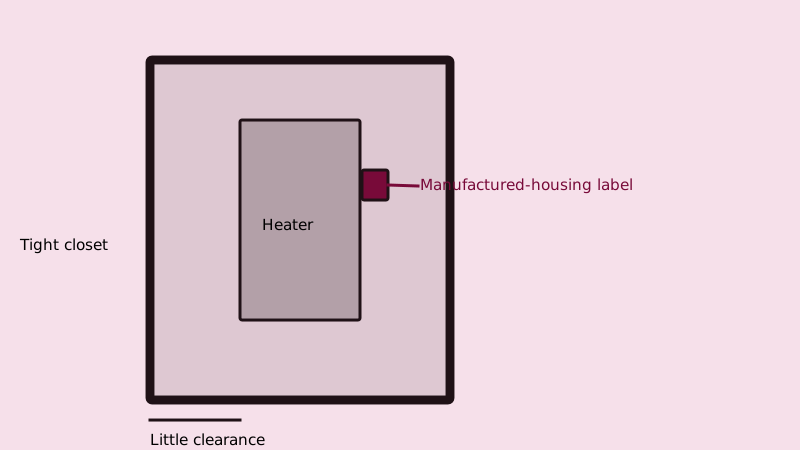
Mainly because it must be made for manufactured housing. The guide says any replacement water heater must be specifically approved for manufactured housing and carry a HUD label, and that a standard house water heater does not meet that requirement. A narrower choice of models can mean higher prices than a common house tank.
Check the rating plate or label before you buy anything. Before choosing a unit, ask the park, the maker and the city which rules govern your home, and treat a labeled unit as the safe choice.
Tight closets and special venting add labor, and a gas heater needs proper flue and combustion air. A plumber looks at the access first.
What moves the final bill?
Heater type, tank size, fuel, venting, the age of the old connections, how cramped the closet is, the permit, and getting the old tank out. A gas heater needing a new flue costs more than an electric one that drops in, and a leak that rotted the floor adds carpentry. A firm price is only possible once someone has seen the closet.
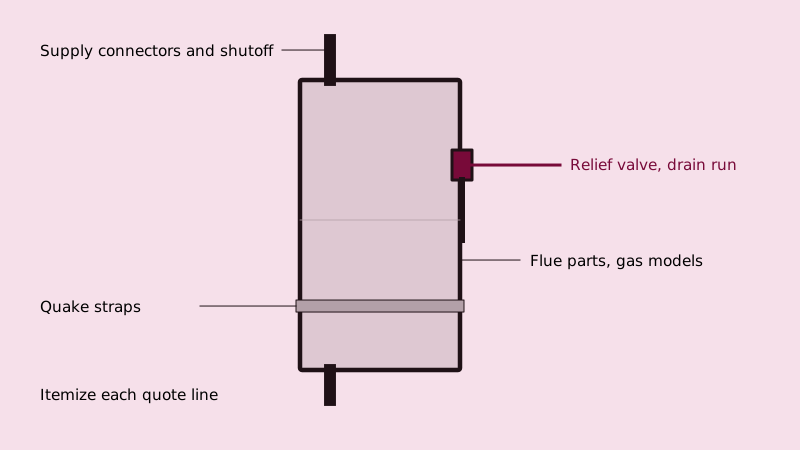
Typical line items:
- The heater itself, sized to the home.
- Fresh supply connectors, a shutoff, and the safety relief valve with a drain run.
- Quake straps, which state law (Health and Safety Code 19211) asks for on water heaters.
- Flue parts and a gas connection on gas models.
- A permit where the city or park asks for one, plus an inspection.
- Disposal of the old tank.
If a quote lands far from the guide's ranges, ask for line items. Itemized quotes can be set beside each other.
Should I choose a gas or an electric mobile home heater?
Stay with the fuel you have unless something forces a change. Swapping fuel means new gas lines or electrical circuits, and that raises cost. Electric units are simpler to install and avoid venting. Running costs depend on your rates, which change, so ask for the numbers in writing.
The same guide notes that electric tankless units typically need a larger breaker than many manufactured homes provide, since most have a 50-amp service maximum. Gas tankless units fit electrically but need proper venting, and units approved for manufactured housing are less common. For a tankless comparison, read tank vs tankless water heaters.
California regulates gas piping, so expect a contractor and normally a permit; the gas line plumbing page has details. Smelling gas means leaving the home immediately, then calling SoCalGas (1-800-427-2200) from the lot, with 911 held for genuine danger.
Is it time to replace, or can the old heater be saved?
Replace if the tank leaks, the shell has rusted through, faults keep piling up, or age has caught up with it. Repair when a single part, perhaps the thermostat or an element, is the entire problem. Repair costs less but only pays off on a sound tank.
Water that runs rusty, a rumbling tank and puddles in the closet are warning signs. Timing is covered in water heater lifespan. Water from a failed tank can wreck a mobile home floor fast, so a leaking tank should not wait; urgent heater repair explains that route.
What belongs in a good quote?
Confirm the unit carries the manufactured-housing label, note its size, and check that straps, valves, venting, permit and removal are included, along with a plan for corroded old connections. Labor and parts should be separate lines, and the quote should say whether a permit or park approval is part of the job.
To start, give the price request form your fuel type, tank size, location of the heater, its age, and whether the home is in a park. Other services are listed at Rio Hondo Plumbing.
Common questions
Is an ordinary house heater acceptable here?
The guide says a standard house heater does not meet the manufactured-housing requirement, and that any replacement must be approved for that use and carry a HUD label. Ask the park, the maker and the city what applies to your home. Using a labeled unit is the safer course.
Is there a permit for this swap?
Water heater replacement is generally permitted work in California, though who issues it for a mobile home, especially one inside a park, can differ. Ask the city or the park office first. Whittier's Building and Safety desk answers at (562) 567-9320.
How long will it take?
The guide counts a few hours of labor, two to four, for a normal swap. A cramped closet, a new flue, corroded connections or floor damage push past that. Photos of the closet and the old unit help the plumber estimate.
Would a tankless unit suit a manufactured home?
It can be, but it depends on venting and electrical capacity. The guide says electric tankless units usually need a larger breaker than many manufactured homes have, while gas units need proper venting, and approved models are less common. A plumber has to check your home before recommending one.
How can the new heater be made to last?
Flush it as the maker advises, keep the closet clear, have the relief valve checked at service visits, and watch for rust or damp. Hard water adds scale, and the City of Whittier's 2025 report lists average hardness of 250 mg/L for its own system. A softener can help in some homes.