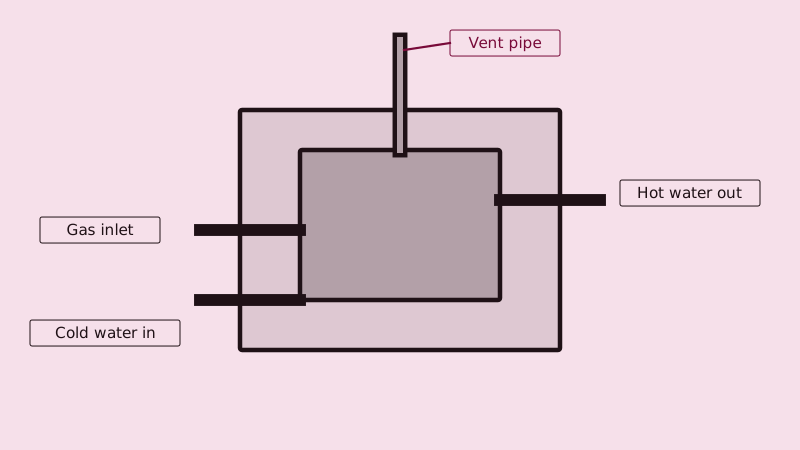
A tankless unit is a bigger job than a like-for-like tank swap. The heater heats water only on demand, so it draws a lot of gas for short bursts, needs its own vent, and usually wants a larger gas line than the old tank did. The wider choices sit in water heater repair and replacement. When you want a visit from a local plumber, ask through the price request form.
What happens on the day a gas tankless unit goes in?
The sequence runs like this: the old heater comes out, the tankless unit goes on a wall, hot and cold lines connect through isolation valves, a gas line sized to the unit is run, and a vent goes in, plus a condensate drain for a condensing model. Finally the unit is fired, tested for leaks and combustion, and set up.
The gas side decides the difficulty. A tankless unit's rated input is far higher than a tank's burner, so the existing half-inch or three-quarter-inch line may be too small and need upsizing. SoCalGas serves every city we cover, and the plumber works from the unit's rated input and the length of the run. Gas piping is regulated work, and the law requires a contractor for it. National figures from Angi put labor at $600 through $1,900 and the installed total at $1,400 through $3,900, and installation cost breaks it down.
Which code and permit rules apply?
Replacement and new installations are permitted work in most California cities, and the permit brings an inspection of the gas connection, vent, drain and relief valve. The California Plumbing Code and the manufacturer's instructions both apply. Ask the building office where you live, since requirements vary by city.
In Whittier, the Building and Safety Division is at 13230 Penn Street, (562) 567-9320. Other cities have their own offices and phone numbers on the service areas pages. California requires a contractor license for work of $1,000 or more in labor and materials, and for any job that needs a permit, and a tankless install clears both bars easily. Ask your quote to name who pulls the permit and who schedules the inspection. A water heater that was never inspected can complicate a sale.
Condensing or non-condensing, what changes in the install?
A condensing tankless heater pulls extra heat from the exhaust by cooling it until water condenses, which makes it more efficient. The exhaust is cooler, so it typically vents through plastic pipe, and it produces acidic condensate that needs a drain and usually a neutralizer. A non-condensing unit runs hotter and needs metal venting.
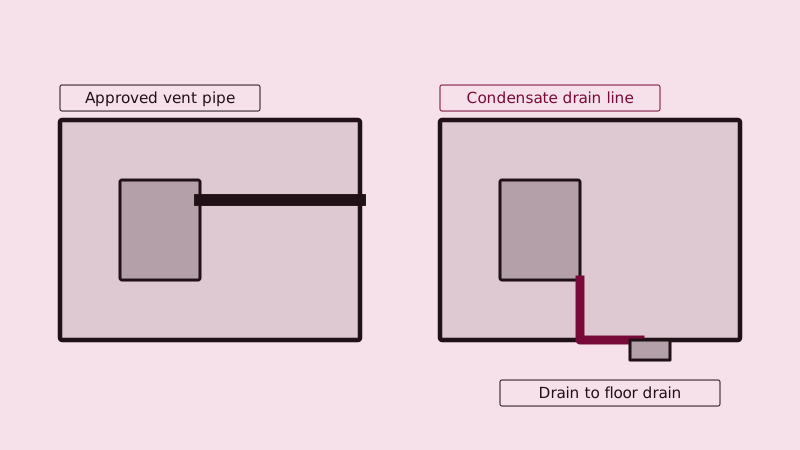
That difference shapes the install. Condensing units are easier to vent through a wall but need a drain nearby. Non-condensing units may be able to use an existing flue route but need approved pipe. The unit's manual states which vent materials are allowed, and the plumber follows it. Brand guides, such as those from Rinnai, are the authority for clearances, vent lengths and settings, and a professional installation follows them to the letter.
Will the gas line need upsizing, and what about relief valves?
A tankless heater can ask for many times the gas flow of a tank burner when it fires at full power, and a line sized for the old heater may starve it. The result is erratic temperatures or error codes. The plumber compares the unit's rating to the pipe size and run length and the meter capacity.
A temperature and pressure relief valve is a safety device that most storage heaters carry. Tankless units hold little water, but some installations still call for a pressure relief valve or an expansion tank when the water system is closed. Ask what the manual requires. See pressure relief valve replacement for what the part does, and expansion tank replacement for when one is needed.
What does hard water do to a tankless heat exchanger?
Scale forms inside the heat exchanger and slows the flow, and tankless units are more sensitive to it because the water passes through narrow passages. Whittier's city water averaged about 250 mg/L total hardness in the 2025 report, near 14.6 grains per gallon, so annual descaling is a sensible habit.
Install isolation valves with flush ports so the unit can be flushed without cutting pipe. Some owners also add a softener upstream, which can protect the unit and the rest of the plumbing. Whether you need one depends on your supplier's hardness figure. Our guides on softener installation and scale prevention explain the options. The Department of Energy says tankless units can last more than 20 years, which assumes the heat exchanger is kept clean.
What if the hot water works but the heating does not, or neither works?
Those are different faults. Many southern California homes use a furnace or heat pump for warmth and a separate water heater, so a heating failure does not mean the heater is broken. In homes where one boiler or a combined unit supplies both, a fault in that unit can take out both.
If there is no hot water, check the pilot or power, the gas supply, the breaker, and whether the unit shows an error code. A tankless unit may fail to fire at very low flows, or because a filter is clogged. Our guide on why there is no hot water lists causes. If the issue is a repair, water heater service and repair is the next stop. If you smell gas, leave the building and call SoCalGas at 1-800-427-2200 from outside, and call 911 if there is danger.
Is a do-it-yourself tank-to-tankless switch realistic?
Not legally for most of the work. The gas line, vent and permit make it a contractor job above the $1,000 threshold, and a mistake can release carbon monoxide or gas. A homeowner can help by clearing the area, choosing the model and deciding where the unit goes.
Think about location first. Tankless units are compact and can hang on a garage or utility wall, or outside in mild areas if the model is rated for it. Check clearances to windows and combustibles, and ask about the plan for the old tank. The regional air board voted in June 2025 not to amend Rules 1111 and 1121, so a zero-NOx mandate is not coming from that vote, and your choice should rest on cost and fit. For the tank option compared side by side, read tank versus tankless. The home page lists the other jobs we arrange.
Common questions
How long does a tankless heater installation take?
A replacement of an existing tankless unit can be done in a few hours. A conversion from a tank, with a new vent, gas line and drain, often takes most of a day or more. The plumber should give a time estimate and tell you when hot water will be off.
What should I ask before I hire someone to install a tankless heater?
Ask which model and input rating, whether the gas line needs upsizing, how it will be vented, who pulls the permit, and whether isolation valves are included. Ask what the warranty covers and who handles it, and get the answers in writing. Compare quotes line by line.
Does a tankless heater need a pressure regulator?
Not usually on its own. The unit has a working pressure range printed in its manual, and the house should sit inside it. If your supply pressure is high, a regulator on the main protects every fixture. Test with a gauge first, and see pressure regulator replacement.
Do tankless heaters really run out of hot water?
They do not run out the way a tank can, but they have a flow limit. If you run several fixtures at once, the unit may not keep up and the temperature drops. The plumber should size the unit to your peak demand, counting showers, a dishwasher and a washer running together.