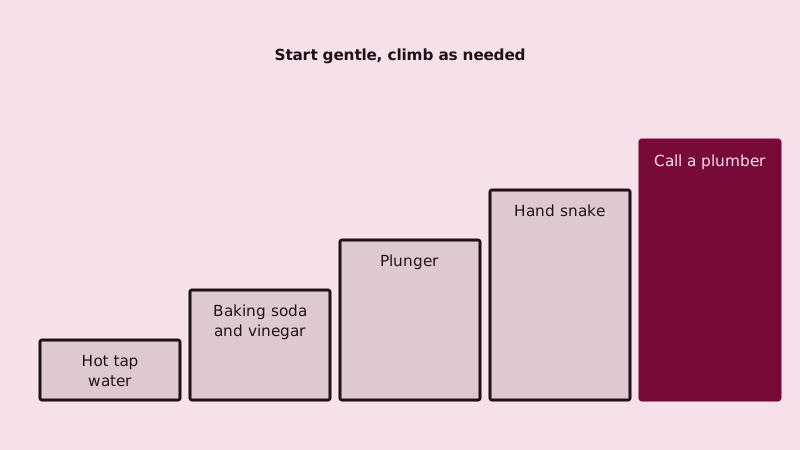
Escalate gradually. Begin with hot tap water, move to a baking soda and vinegar treatment, then plunge, then dismantle the trap or feed in a hand snake. That ladder defeats most hair, soap and grease plugs and needs no caustic chemicals. When two or three rungs fail, the trouble probably lives in the pipe, head for drain cleaning and clogs to think about the line beyond the sink.
Which kitchen and bathroom sink remedies are worth the effort?
Four earn their place: very hot tap water, baking soda with vinegar, a cup plunger and a hand-cranked snake. Hot water softens grease, the fizzing mix loosens light film, the plunger shoves a blockage along with pressure and the snake reaches farther than any of them. All four are cheap and reversible.
Match the remedy to the culprit. Kitchen basins clog on grease, soap film and food scraps, while bathroom basins fill with hair, toothpaste residue and soap scum. A sink that merely drains lazily can start with the mild options. One that holds a pool of water has a plug near the trap, so go straight to plunging or snaking.
Prepare the ground first: empty the cabinet beneath, set out a bucket and some old towels, and lift out any stopper. In bathroom sinks the usual culprit is the pop-up stopper itself, where hair wraps around a little pivot rod a couple of inches below the drain.
How exactly do baking soda and vinegar work on a drain?
Shake about 120 ml of baking soda into the opening, chase it with the same amount of white vinegar, cap the drain and leave it fifteen to thirty minutes while it foams, then rinse with hot water. It handles light film and odor. A dense wad of hair or a hardened grease cork will shrug it off.
Most of the reaction is foam, so keep expectations modest and treat it as a harmless first attempt or a way to freshen a drain. Never layer it over a commercial cleaner still sitting in the pipe, because mixed chemicals can give off hazardous fumes. If a store-bought product went down recently, skip this step and read that label's warnings first.
Do boiling water, salt and dish soap help?
Hot water helps against grease, but boiling water brings risks. Poured into a porcelain basin it can crack the glaze or the bowl, and it may soften PVC joints under the sink, so the hottest tap water you can get is the safer pick. A squirt of dish soap before the hot water cuts grease nicely. Salt adds very little.
On a grease clog, run the hottest tap for several minutes with a generous dose of dish soap, stop, let the soap sit, then flush again. When the sink speeds up but slows once more within days, the grease has merely traveled downstream and set up further along the line.
Should I reach for a plunger or a snake?
They tackle different jobs. A plunger shoves and pulls water against the blockage and suits plugs near the opening. A snake, a coiled flexible cable, travels through the trap and beyond, shredding or snagging the plug. Try the plunger first, because it needs no dismantling.
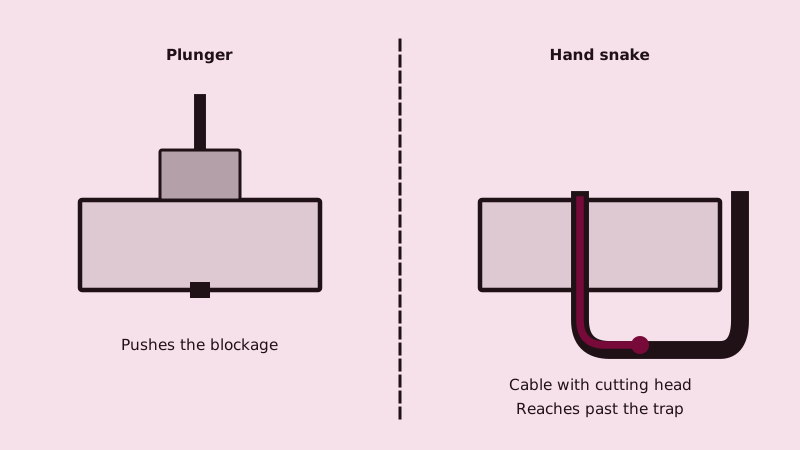
Plunging technique: jam a wet rag into the overflow slot, let the basin fill past the rim of the cup, press the rubber flat and work the handle briskly a dozen times without lifting the seal. On a double kitchen basin, stopper the other drain. With a snake, feed it in slowly, crank when it meets resistance and pull out whatever it grabbed. Expect a revolting tangle.
Reaching the trap means turning the slip nuts by hand over a bucket, rinsing out the U-shaped bend and reassembling with the washers seated square. The trap steps are shown in unclogging a bathroom sink, and kitchen double basins plus grease have their own steps in clearing a kitchen sink.
What if the blockage keeps coming back?
A repeat blockage usually means a narrowed, rough or damaged pipe downstream, not a sink fault. In postwar tract houses like those across Downey, Norwalk, Pico Rivera and La Mirada, aging cast iron or clay drains can roughen and catch debris.
Census data lists median build years of 1957 for Norwalk and Pico Rivera, 1959 for Downey and 1960 for La Mirada. Age by itself proves nothing about your pipes. Still, a drain that has plugged more than once, or one where a neighboring fixture gurgles whenever this one empties, points past one sink at the branch line or main.
Roots, kitchen grease and offsets where old pipe sections have shifted are the usual suspects. A camera on a cable shows which one. Hydro jetting, a high-pressure water scour of the pipe wall, removes what a snake leaves behind, though whether it suits a particular line is for the plumber to judge.
Which remedies are best skipped?
Skip chemical drain cleaners when you can. Caustic products can attack some pipes and fixtures, splash onto skin or eyes, and leave standing liquid that is dangerous for whoever opens the drain afterward. Do not combine products, and do not pour in anything you cannot rinse out again.
Leave coat hangers out of it too, since they scratch fittings, and keep wire brushes away from plastic pipe. A plunger after a chemical is risky because of splashback. If you did use a cleaner, tell whoever comes so they can wear protection.
Disposals change the rules. Keep a hand out of the chamber, and switch the power off first. Unclogging a garbage disposal drain deals with that case separately.
At what point does it become a plumber's job?
Call when water stays put after plunging and trap cleaning, when a second fixture runs slowly or gurgles, when sewer odor or a backup surfaces at the tub or a floor drain, or when the plug returns inside a few days. Any of these suggests the blockage sits deeper, past the reach of hand tools.
Send the price request form naming the affected fixtures and your attempts so far, and someone local is set up to price it. Sinks that are slow but not stopped have a page too: why a sink drains slowly. The cost of clearing a line depends on access and method, so only a bid gives a real number.
Common questions
How soon should a remedy show results?
Soda and vinegar need fifteen to thirty minutes plus a rinse, plunging takes a few minutes and a snake perhaps twenty. If the water level has not improved after two rounds of the mild methods, stop repeating them and open the trap or bring in a plumber.
Which details should I pin down with a plumber?
Find out the planned method, whether a camera inspection comes with the price should the clog return, and whether a minimum charge applies. For anything bigger, look up the contractor license via the CSLB. A priced scope in writing prevents invoice surprises.
Should I be at home?
Yes, or an adult you trust. Someone needs to point out the problem sink, the cleanout and the shutoffs, and approve the figure. Clear the space below the sink beforehand, expect some mess and keep animals out of the room.
Is baking soda alone enough?
Rarely, for a real clog. It suits light film, a sluggish drain and odor. A solid plug of hair or grease needs a plunger, a cleaned trap or a snake. Try the mild methods once, then escalate rather than repeating them for days.
This guide is one of many on Rio Hondo Plumbing.