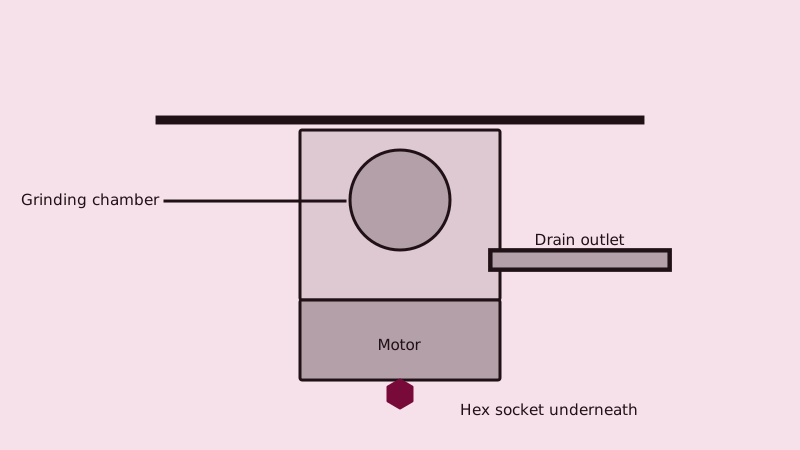
Before anything else, remove power: the wall switch goes off, the plug comes out or the breaker trips, and no fingers go anywhere near the grinding chamber. A motor that buzzes without turning is jammed. Water pooling in the bowl while the blades spin freely is a clog farther along. Bathroom drains get similar attention from the clogged toilet plumber.
Is it a jam or a clog?
A jam is trapped material inside the grinding chamber: the motor buzzes and nothing rotates, and the reset button often pops. A clog lives farther along, in the trap, the drain pipe or the dishwasher hookup, so the blades turn as usual but water stays put or leaves slowly.
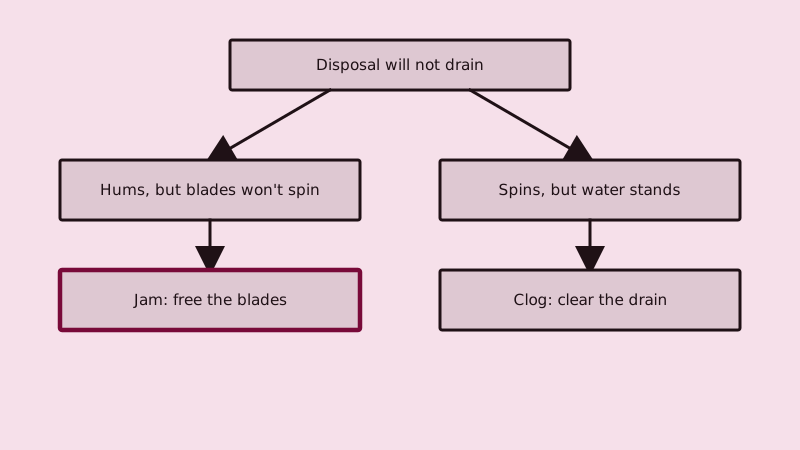
Try a short test with a little water running. Buzzing and no grinding noise: jam. Ordinary grinding plus standing water: clog. If both bowls of a double sink fill when the dishwasher drains, the stoppage is past the disposal.
Hold off running the dishwasher during a backup. Its drain empties through the disposal, so the dirty water can spill onto the floor.
What frees a stuck disposal?
Power first, then work from underneath. Slide a hex key up into the socket at the underside's center and wiggle it side to side until the shaft swings all the way around. Give the motor time to cool, push the red reset button, restore power, and run water as you test.
InSinkErator is blunt on this point: a hand never goes inside. If something is visible, lift it out with tongs. Typical offenders include a bone, a peach pit, a jar lid, a spoon that slid in, or stringy vegetables.
A reset button that springs back out straight away suggests the motor is fighting a stuck blade or has burned out. Check the GFCI outlet and the breaker before blaming the unit. A motor that stays silent after reset may need replacing, and disposal installation describes that job.
What if the bowl is full of water?
Begin with a plain cup plunger. Plug the second bowl's drain with a damp rag, leave an inch of water above this one, and plunge firmly for 20 to 30 seconds. If the level drops, rinse with hot water. If not, move to the trap under the cabinet, which takes a bucket and a wrench.
For the trap:
- Cut power to the disposal.
- Set a bucket underneath and loosen the two slip nuts, hand-tight or with pliers.
- Slide the trap off and empty it. Grease mixed with coffee grounds often sits here as paste.
- Peer into the wall pipe with a flashlight, then put everything back with the washers seated flat.
- Run hot water, and inspect the joints for seepage.
A lot of disposal clogs lodge in the short stub between the disposal and the dishwasher inlet. If water only backs up when the dishwasher drains, that stub may be blocked, or the installer never knocked out the plug in the dishwasher port.
Does drain cleaner belong in a disposal?
No. Liquid openers can pool in the chamber, attack seals, and splash up when you plunge, and they turn the next person's repair into a hazard. Baking soda with vinegar might loosen a thin film, but it will not shift a solid plug. Hot water and a plunger do more, and a plumber's auger does the rest.
If chemicals have already gone down the drain, say so when you call. The plumber will wear gloves and goggles to open the trap. A hardware-store snake can clear a trap arm and the first stretch of pipe, and beyond that the work calls for professional equipment.
More home options are in home remedies for clogged sink drains, and the sink itself gets its own treatment in kitchen sink unclogging.
Which foods should stay out of a disposal?
Grease, coffee grounds, eggshells by the handful, rice, pasta, potato peels, bones and stringy produce like celery stalks and corn husks. A disposal chops food but does not liquefy it, and grease cools into a coating that narrows the pipe until it closes.
Habits that cut clogs:
- Scrape plates into the trash and pour cooking grease into a can.
- Keep cold water running during grinding and for about 15 seconds after.
- Feed it small amounts at a time, not a full sink.
- Skip fibrous or starchy foods.
Old pipe plays a part too. Many postwar kitchens in Whittier, Norwalk and Downey still have cast iron or galvanized drain lines with rough interiors, which catch grease sooner. Census figures put the median Downey home at about 1959 and the median Norwalk home near 1957. A kitchen that clogs again and again may need the whole line cleared, not just the trap.
At what point do you need a plumber?
If the plunger and trap change nothing, if several fixtures back up together, water bubbles up in a tub or laundry standpipe, or the disposal is dead. Those symptoms suggest trouble beyond the kitchen. A 2026 survey puts clearing a single drain around $150 to $350.
A line that keeps clogging in the same place calls for a camera, to see whether the pipe is cracked, offset or full of roots. Find out what the plumber sees and what the price includes before work begins. To get a figure on paper, send a request naming the fixtures affected. How a visit gets arranged is described on the Rio Hondo Plumbing main page.
Common questions
My disposal buzzes and the blades won't turn. Why?
The blades are wedged. Cut power, rock a hex key in the center socket underneath until the shaft rotates freely, let the motor rest a few minutes, then push the red reset. Hands stay out of the chamber the whole time.
What clears a disposal that holds water?
Block the second sink bowl and plunge, then look at the trap beneath and the dishwasher connection. Skip the chemicals. If water still sits after plunging and the trap is clean, the blockage sits further down and takes an auger.
Will pouring baking soda and vinegar fix it?
They can freshen the chamber and loosen a thin film, though they seldom break a real blockage. Treat them as light maintenance, not as a rescue for a stopped drain. A plunger and hot water work better, and chemical openers are best avoided.
Does every disposal clog need a plumber?
Not every time. A jam or a simple trap clog is manageable if you cut the power and follow the steps. Call one when the reset keeps tripping, the motor is silent, several drains back up, or the unit itself is leaking.