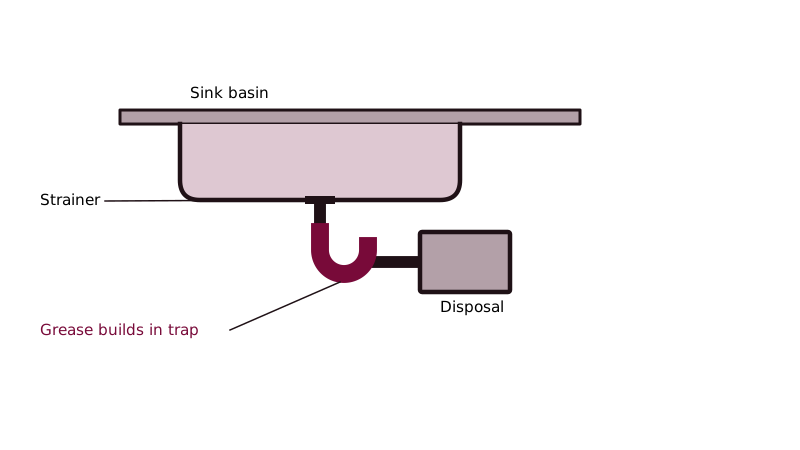
Slow kitchen drains build up over months: cooking fat cools and sticks to the pipe wall, food scraps catch on it, and the opening shrinks until water sits. The cure is usually physical, not chemical. If the problem reaches toilets and tubs as well, the blockage is in the main line, which is the territory of drain and toilet clog help. For a plumber visit, use the price request form.
Why is my kitchen sink draining slowly?
The usual cause is a partial blockage of grease, food and soap scum in the trap or the branch pipe behind it. Less often it is a blocked vent, a dishwasher or disposal line that is clogged, or a problem in the main drain. If only this sink is slow, the blockage is local to it.
Look at the clues. Water that drains steadily but slowly suggests a narrowed pipe. Water that sits and drains in gulps suggests a blockage farther down or a vent problem. A gurgle in a nearby sink is a sign the line is partly blocked. If the dishwasher backs up into the sink, the shared connection is the culprit. For a fuller list, see why a sink drains slowly.
What can I try first without tools?
Clear the strainer and look in the drain opening. Run the hot tap for a minute, since it softens fat, and watch whether the water speeds up. Then plunge with a cup plunger. Block the other bowl and the dishwasher line with a wet rag, cover the drain with the plunger, and pump firmly ten or fifteen times.
Add water to cover the plunger cup. If the water drops after plunging, repeat once or twice. Boiling water is fine for a steel sink and metal pipes, but pouring it on a plastic trap can warp it, so use very hot tap water on plastic. A cup of baking soda followed by vinegar fizzes and can loosen a light film, though it rarely clears a solid plug. Our summary of home remedies for a clogged sink drain shows what these methods can and cannot do.
How do I clear the trap under the sink?
Put a bucket under the trap, unscrew the two slip nuts by hand, lower the curved pipe, and empty it. Clean out the gunk, rinse the trap, check the washers, and put it back, hand tight plus a quarter turn. Then run the water to check for leaks.
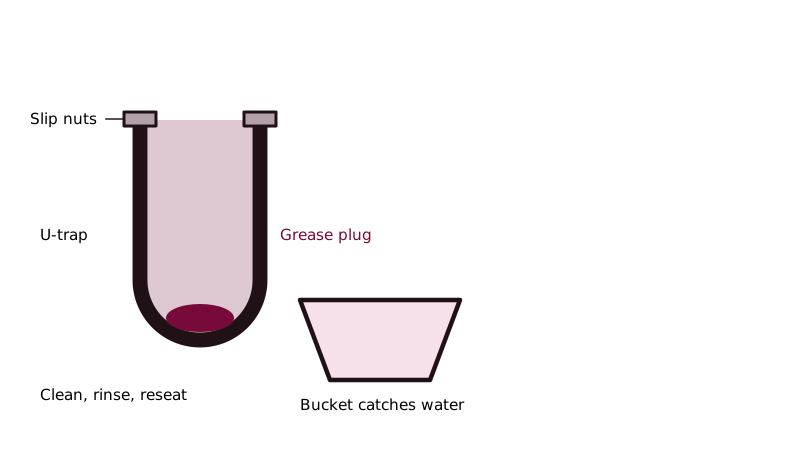
This step solves most slow kitchen sinks because grease collects in the trap. Wear gloves, because what comes out is unpleasant. If the trap is clear, look into the pipe going into the wall with a flashlight. Put the trap back in the same order, with the washers' bevels toward the fittings. If a leak appears, repairing a leaking pipe under the sink covers the fix.
How do I use a drain snake on a kitchen sink?
Feed a small hand auger into the pipe opening behind the trap, and turn the handle as you push until you feel resistance. Crank to hook or break through the clog, pull the cable back slowly, and clean off what comes with it. Repeat until the cable runs freely, then flush with hot water.
Go gently. A cable pushed hard can scratch pipe or lodge in a bend. A snake is the right tool for grease and food clogs but not for a collapsed pipe or tree roots. If the cable stops at the same distance every time, the blockage may be a break or a joint, and a camera inspection can find it. See how to unclog a kitchen sink for more steps with a plunger and auger.
Should I use a chemical drain cleaner?
It is best to avoid them. Chemical drain cleaners can irritate skin and eyes, give off fumes, and sit in a pipe that does not clear, which leaves standing caustic water for the next person who opens the trap. They also can damage some older pipes and fittings and rarely clear grease from the whole run.
If you already used a chemical and the sink is still slow, tell the plumber before they open the trap, so they can wear gloves and eye protection. Enzyme-based cleaners are gentler, but slower, and work best as a monthly maintenance step. Pouring grease down the drain, running the disposal with fibrous scraps and rinsing coffee grounds into the sink are all common causes. Scrape plates, wipe pans with paper, and keep grease in a can.
What if the garbage disposal is involved?
A disposal with a clogged outlet or a backed-up dishwasher line makes a sink drain slowly, and a double sink with one disposal side can slow just that bowl. Run the disposal, check the dishwasher connection, and clear the knockout plug if a new disposal was just installed. See unclogging a garbage disposal drain.
If the disposal hums but does not spin, switch it off and follow the maker's reset steps. Never put your hand in it. If the disposal body leaks or is jammed after several tries, it may need to be replaced by a plumber. Our page on garbage disposal repair covers that side.
When is a slow sink a job for a plumber?
Call a plumber if the sink is still slow after the trap is clear and the snake has run, if several fixtures drain slowly, if water backs up elsewhere, or if the smell is persistent. Those point to a blockage deeper in the system, which may need a longer cable, hydro jetting or a camera.
Postwar homes in Downey and Norwalk, where the Census puts the median build year near 1959 and 1957, often have older cast iron or clay drain lines that roughen with age and catch grease and roots. A plumber can run a cable, use high-pressure water to scour the line, and inspect it with a camera to see its condition. California requires a contractor license for work of $1,000 or more in labor and materials, and for any job that needs a permit, which is rarely an issue for clearing a drain. Slow bathroom sink fixes are similar. Our home page lists other work we arrange.
Common questions
Can I pour boiling water down a kitchen drain?
Hot water helps with grease in metal pipes, but boiling water can soften or warp plastic pipes and traps and can crack porcelain. If your drain is plastic, use very hot tap water. Pour it slowly, and follow with dish soap to help the grease move along.
Does baking soda and vinegar really unclog a sink?
It can loosen a light film and freshen a drain, and it is safe for the pipes. It does not clear a solid clog or a grease plug well. Treat it as a gentle first try or a maintenance step, not as a repair for a drain that is barely moving.
How can I stop my kitchen sink from clogging again?
Scrape food into the trash, wipe grease from pans, and use a strainer. Flush the drain with hot water and a little dish soap after greasy meals. Clean the trap once or twice a year, and avoid putting fibrous or starchy waste such as celery, rice and potato peels through the disposal.
How much does it cost to fix a slow sink?
Clearing a simple blockage yourself costs little. A plumber's visit depends on the job, and we do not have a sourced local figure to print. Ask for the price in writing before work starts, and ask whether a camera inspection or hydro jetting is part of it.