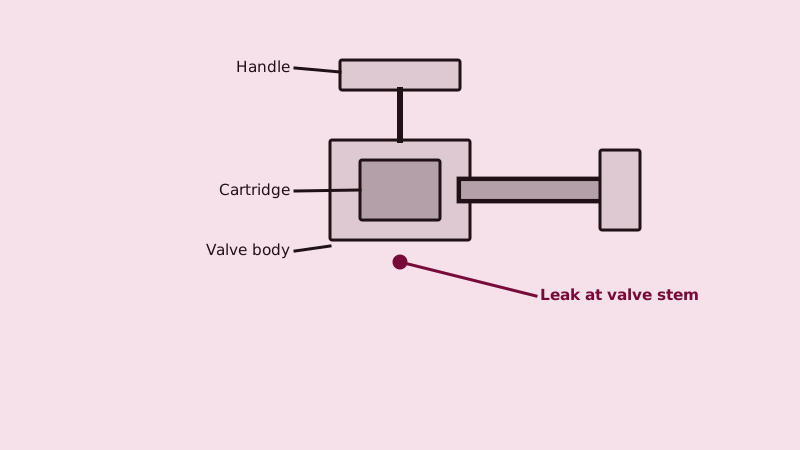
If water keeps falling from the head or spout after the handle is closed, a seal inside the valve has given up. Most homes need only a new cartridge or a set of washers, a cheap part and under an hour of work. Neighboring fixtures, sinks and disposals included, have a hub at faucets, sinks, showers and disposals.
Where exactly is the shower leaking from?
Where the water appears points to the cause. A head that dribbles on after the handle is closed points to a valve that is not sealing. Beads around the handle or trim suggest tired O-rings or a slack bonnet. Water spilling from the tub spout during a shower is a diverter problem, a separate part, and a discolored patch on a wall or ceiling hints at a pipe or valve-body leak.
Check each spot in turn. Run the shower, shut it off and stare at the head for a minute; scan the handle for beads; then look for staining on any wall or ceiling sharing the shower's plumbing. A leak inside the wall will not respond to a handle repair.
The waste is real. EPA calculates that a showerhead losing ten drips per minute throws away upward of 500 gallons in a year, and a faucet with a steady one-a-second drip loses over 3,000.
Which type of valve is behind the handle?
Pull the handle and see. Separate hot and cold knobs mean compression stems fitted with rubber washers. One lever swinging sideways for temperature almost always conceals a cartridge, and a few use a ball or ceramic disc. Brand names are usually stamped on the trim or the cartridge itself.
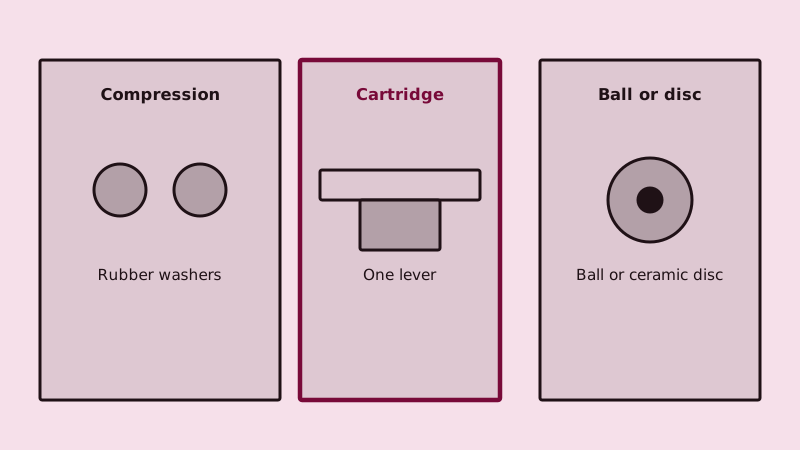
Knowing the type matters because replacement parts are specific. If the make is a mystery, pull the old cartridge and carry it to a plumbing supply counter for a match, or photograph the trim and cartridge before you leave home.
Before opening anything, cut the water. Stop valves sometimes hide behind a panel in the adjoining closet or utility room. If there are none, shut the main valve for the entire house and open a downstairs faucet to relieve the line. Drop a rag over the drain so small screws cannot vanish.
What does a two-handle faucet need?
With the water off, remove the handle and bonnet nut, pull the stem, change the rubber washer at the tip as well as the O-ring around the stem, and examine the brass seat inside the valve body. A rough seat can be refaced using a dressing tool, or the whole valve replaced.
Washers harden and wear against the seat, which is why the drip appears when the knob is closed. Match the washer size carefully; a washer that is slightly off leaks again within weeks. Put it back together in reverse and test both knobs.
Hard water speeds up this wear. The City of Whittier's 2025 report lists total hardness averaging 250 mg/L, and mineral scale on seats and stems can cut a washer faster. For ways to slow it, read hard water scale prevention.
When is a shower leak a professional's job?
Hand it off if the shutoffs do not hold, the cartridge or stem will not budge, the valve body is split or corroded, the valve sits behind a wall that needs opening, the leak shows on a ceiling below, or the first repair fails. Those are valve replacements or wall-access jobs.
Replacing the entire valve means opening the wall from the back or removing tile, cutting the pipes, soldering or connecting new fittings and restoring the finish. That is plumbing work with a mess attached, and it is not a casual DIY task. Our page on shower leaks explains what a plumber looks for.
The price request form takes the valve type, the symptom and any brand name you spotted. We set up someone local to quote, and the written figure should reach you before the job starts.
Why might it keep dripping after a repair?
Usual causes: a cracked or worn seat, a cartridge put in backward or not fully seated, the wrong replacement, a nicked O-ring, or scale in the valve body. A leak that persists often means the valve itself is spent and should be replaced, not rebuilt.
Pull the cartridge again and inspect where it seats, then flush debris out of the body with a brief burst of water. A diverter leak belongs to the tub spout, and fixing a leaky tub faucet handles it. Sink faucets follow similar logic, covered in leaky sink faucet repair.
Fixing a drip that continues for weeks is more than a comfort issue: a leak inside the wall wastes water and damages the structure.
How is the cartridge swapped in a one-handle valve?
With the water off, flip the cap off the lever, then back out the screw below it, lift away handle and trim plate, then free the cartridge's retaining clip or nut and ease it directly outward using pliers or the maker's puller. Fit the matching cartridge in the same orientation, rebuild the trim and test.
Here is the sequence in detail:
- Lay a towel across the tub floor and block the drain.
- Use a small flat screwdriver to lift the handle cap, and take out the screw hiding underneath.
- Slide off the handle and the round escutcheon plate behind it; scale may grip it, so wiggle gently.
- Release the clip, or unscrew the holding nut, and remember how the clip was oriented.
- Grab the cartridge stem and extract it with a steady twist; a stubborn one needs the brand's own puller.
- Examine the valve body for scale or pitting, wipe it clean and coat the replacement O-rings in a plumbing-rated silicone grease.
- Seat the new cartridge in the orientation of the old one, using its notch or hot and cold marks as a guide.
- Refit clip, plate and handle, restore the water gradually and watch the trim and the head for drips.
If the cartridge will not budge, stop; forcing it can damage the valve body.
Common questions
How much time will it take?
A cartridge swap on an accessible valve typically needs thirty to sixty minutes, plus the store run. New washers in a two-handle faucet are about the same. Stuck parts, scale or an unusual brand stretch it, and a whole-valve replacement takes far longer.
Which points should I raise with a plumber?
Whether parts are in the price, the minimum charge, if they would replace only the cartridge or the entire valve when it is worn, and whether the work carries a warranty. For larger jobs, run the contractor license through the CSLB lookup and have the number written out.
Should I be in the house?
Yes, or an adult acting for you. Someone needs to walk the plumber to the shower and the shutoffs, mention any other leaks and approve the price. Clear the tub area beforehand, and shut pets out of the bathroom for the duration.
Can a dripping shower waste much water?
It adds up. A showerhead that drips ten times a minute wastes over 500 gallons a year, by EPA's estimate. A hot-water drip costs more than a cold one, because you also pay for the heat. Compared with the water lost, the repair is usually small and inexpensive.
This guide is one of many on plumber in Whittier.