Concrete hides this problem. A pipe has failed under or inside your floor, and the company you hire has to locate it before anyone cuts anything. The national price band is $630 to $4,400 per Bob Vila, and the choice of company swings where you land in it. For leaks in general, start with plumbing leaks; this page is about choosing the firm.
What should a slab leak specialist do on the first visit?
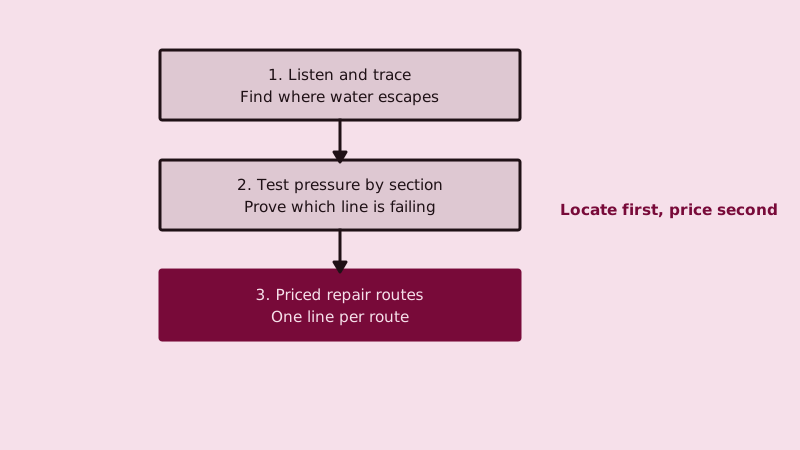
Locate before repairing. A solid visit has three parts: listen and trace to find where water escapes, test pressure in sections to prove which line is failing, then lay out repair routes with prices. If anyone names a figure before they have pinpointed the leak, they are guessing.
Ask four things at the end of the visit. Which pipe is leaking? How was it found? How far is it from where the pipe can be reached without opening the floor? What does each route cost? A diagnosis you can repeat to a second company is the best sign the first one did the job.
What are the clues that a pipe is leaking under the slab?
Four clues recur. Floors that feel warm in one spot. A hiss you hear after bedtime. Carpet that stays clammy beside a wall. A water bill that jumps without a reason. And one more, the meter dial turning while every fixture is closed. Each clue has other possible sources, so testing has the final word.
A homeowner check takes minutes. Switch everything off, record the meter, wait an hour, and compare. If the dial moved, water is slipping out of your pipes. EPA's typical household loses 9,300-plus gallons a year, and a slab leak can easily exceed it. More on the meter test is under unexplained high water bills.
What tools do companies use to find a leak in concrete?
Companies combine listening gear, pressure gauges and thermal or electronic tracing. A technician moves a sensitive microphone across the floor, closes off sections of pipe to narrow the search, and chalks the likely spot. Precise marking means a small opening in the floor, where sloppy marking means a big one.
Ask to see the mark before anyone cuts. Detection as a separate fee is not published in the guides we read; Bob Vila folds this work into its wider repair figures, so we print no standalone price. Have detection appear as its own quote line, so you know what it costs if you later hire someone else for the fix.
Which repair routes will a company offer?
Three show up again and again: cut the slab where the leak is and mend the pipe; retire the failed line and run a fresh one overhead through attic and walls; or replace the entire supply system. Cost, mess and durability differ for each.
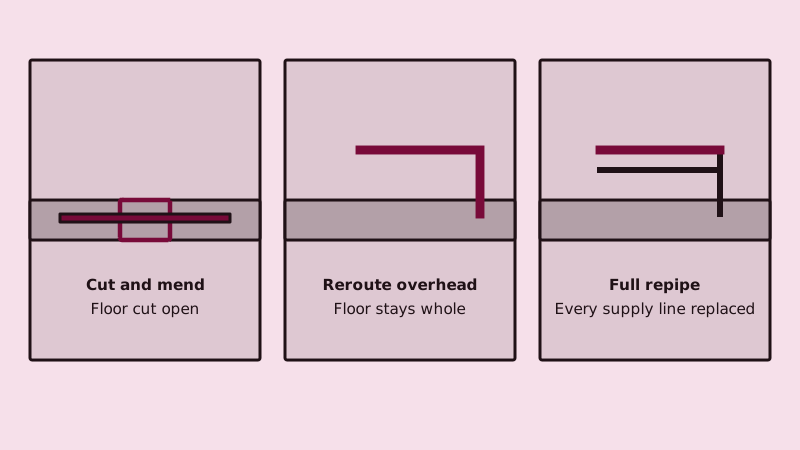
Opening the slab is cheapest today, but sibling pipes of the same age and metal may leak next year. The overhead reroute and the full repipe cost more and spare the flooring. Weigh them using slab leak repair or repipe; a full-house job gets a walkthrough in our repiping guide.
What do slab leak repairs cost?
Bob Vila's slab leak guide gives $630 up to $4,400. Depth, number of leaks, access and floor covering decide where a job falls. Published figures vary, so the written quote sets the price. Ask what the quote covers and what happens if the plumber finds a second leak.
Flooring is the hidden multiplier: tile, wood and stone cost more to lift and replace than bare concrete. The same Bob Vila guide mentions a structural engineer report at $300 to $1,000 and a soil report at $500 to $3,000, relevant only when the foundation itself is in question. Ask whether flooring restoration is inside the quote. Take these as a guide. Only your written quote is binding.
Why do homes around Whittier get slab leaks?
Postwar housing dominates here. Census data put the median build year at 1959 in Downey and 1957 in Norwalk and Pico Rivera, and many houses of that era sit on slabs with pipes run through or beneath them. Metal that old can pit and pinhole. Whittier's 2025 water report lists hardness at 250 mg/L on average, a factor that may contribute.
Cause matters for the repair choice. Corroded pipe tends to fail again along its length, while a bad fitting or a soil shift may be a one-off. A good company says which it found and why that changes the recommendation. Background on aging pipe is in the cost of replacing an old house's plumbing.
Will my homeowners policy pay?
Possibly part of it. Many policies cover the damage a leak causes, like ruined flooring or drywall, and exclude the failed pipe or the search for it, though wording varies and some pay for access. Phone the insurer first, and save invoices, photos and any detection report.
For questions to ask your carrier, see slab leak insurance coverage. We cannot interpret your policy, so have the insurer answer in writing.
How do I choose between companies?
Line up bids by scope as well as total. Confirm the license number with the state's lookup tool, request proof of liability insurance, learn whether a permit will be pulled, and read the warranty wording on paper. A cheap number that leaves out flooring or detection is not cheap.
Walk away from big cash demands up front, refusals to write terms down, or a push to repipe before the leak is located. Past $1,000 of work, or on any permit job, the contractor has to hold a state license. To begin, tell us what you have noticed through the price request form.
Common questions
How long should I plan for?
Following detection, a spot repair can wrap up in two days, concrete patch included, with flooring work on top. Overhead rerouting spans several days, and a full repipe runs longer. Put the schedule in writing, water shutoff hours included, so you can plan around cooking and showers.
Which questions come first?
Find out how the leak gets located, which fix is advised and why, what the total covers, and who rebuilds the flooring and drywall afterward. Request warranty terms on paper, proof of insurance, and a separate detection line in the quote.
Must someone be at home?
Ideally, for the first and last visits. At the start someone describes the symptoms and approves the plan; at the end someone checks the work. Floors may be open and the water off in between. If you cannot attend, say who will cover.
Can I keep using water while I wait?
Light use is possible for a short time, but a slab leak can wash out soil and soak flooring, so do not wait long. If water pools on the floor, a section turns hot, or the meter races, shut the house's main valve, then book a visit.
For the wider picture, start with the plumber guide for Whittier.