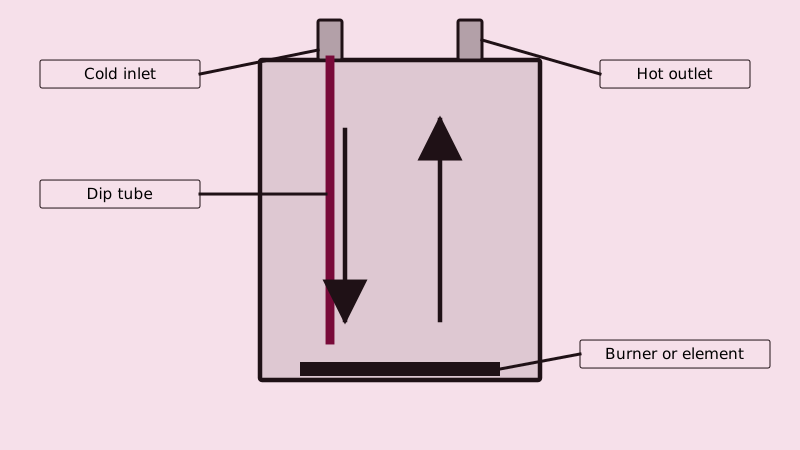
Showers that run lukewarm after a few minutes, with a heater that seems fine otherwise, often come down to a thin plastic pipe inside the tank. It is called the dip tube, and when it cracks the cold water stays near the top instead of sinking to the bottom. The repair is small. Our water heater repair page shows how nearby problems tie in.
What is the dip tube, and why does the heater need one?
Cold water enters a tank at the top, yet a tank heats from the bottom. The dip tube is a plastic straw that hangs from the cold inlet fitting and delivers incoming water down into the lowest part of the tank, near the flame or lower heating element sits. Hot water then rises and leaves through the outlet at the top.
Without the straw, cold water would spill straight into the hot outlet, since both ports sit near each other. The straw is cheap, but the job it does is the whole basis of a storage heater. When it breaks or shortens, the heater still fires normally, which is why the problem is often mistaken for a bad thermostat.
How do I tell a failed dip tube from other hot water problems?
Watch for hot water that disappears in a fraction of its usual time, water that turns lukewarm even with the thermostat set high, and small white or beige plastic bits in faucet aerators, shower heads or inlet screens. Those flakes are the old tube breaking up.
A dip tube is only one possibility on that list. A burnt-out element, a faulty thermostat or an undersized burner produce similar complaints. To sort out the possibilities, read about losing hot water entirely, showers that stay cold and heaters that run yet deliver nothing hot. A plumber can confirm a dip tube by removing the inlet nipple and looking.
Why do dip tubes fail?
Heat and age. Plastic that sits in near-boiling water for years becomes brittle, and sediment scours it. Some tubes made in the mid-1990s are reported to have been prone to crumbling in particular. Hard water speeds things along, since scale collects around the tube end and the tank floor.
The City of Whittier's 2025 water quality report shows an average hardness of 250 mg/L from city wells. Other suppliers serve parts of the area, so check your own bill. If your heater is a decade old, a failed tube is a signal about the tank's age as much as the part itself. Bob Vila says a basic tank model can be expected to run eight to twelve years.
How much does dip tube replacement cost?
The part costs about $10, and Bob Vila says to expect around $150 for part and labor when you hire a professional. That is a guide figure, not an offer. Whatever the plumber writes down in the estimate is what you will be charged. It can rise if the nipple is corroded, access is tight, or the tank needs a flush.
What changes the price:
- A fused or corroded inlet nipple that must be cut out.
- A flush added to clear sediment at the same visit.
- Replacing a heat-trap nipple or a flex connector at the same time.
- A gas or electric appliance in a cramped closet.
What does the repair involve?
The order of work: cut the power or gas, close the cold feed, drain a portion of the tank, disconnect the cold line and unscrew the inlet fitting. Out slides the old tube. A replacement cut to suit the tank height goes in. The nipple goes back on with sealant, and the tank refills before power returns.
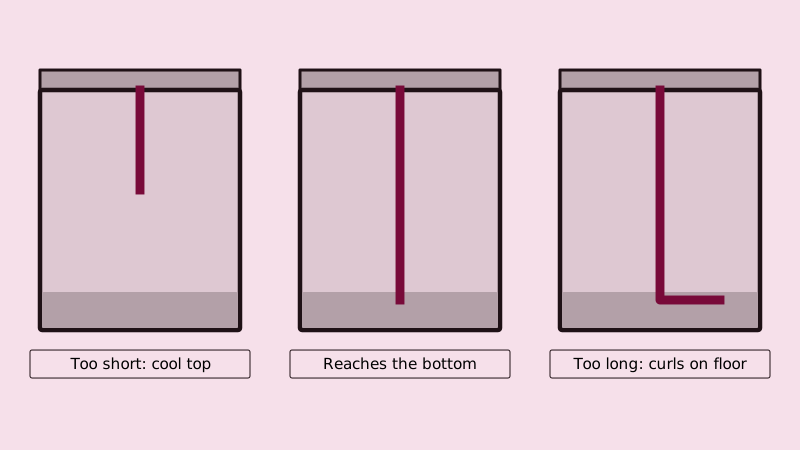
Length matters. Too short, and a cool layer forms up top. Too long, and the end curls against the tank floor. A fresh inlet fitting often goes in alongside, since the old one has sat wet and hot for years. Our own advice is to leave this to a plumber unless you are used to working with gas or high-amp electrical connections.
Should I fix the dip tube or replace the water heater?
A tank of roughly eight years or less, dry underneath and otherwise sound, justifies repair. Past ten years, or with rust or other faults showing, weigh the repair against a new tank first. A leak in the steel shell ends the discussion. A leaking shell cannot be fixed.
Pairing a dip tube repair with an anode rod check, relief valve test and flush spends one visit on several jobs. Related reading: swapping the anode rod, the relief valve and heating elements. For a tank near the end, look at hot water heater replacement and the lifespan guide.
Does a dip tube repair need a permit?
Not for a repair like this, which counts as maintenance. A full heater replacement is the job that needs one. Whittier's Building and Safety Division, (562) 567-9320, can confirm local rules, and neighboring cities run separate counters. The state asks for a contractor license on work totaling $1,000, and on any permit job whatever the price.
Common questions
Can a broken dip tube damage the heater?
Not directly. The harm is mostly inconvenience: poor hot water and plastic bits clogging fixtures. A tube failure does not weaken the tank. But the debris can block aerators and cartridges, and the same age that broke the tube may be wearing out other parts.
Do tankless heaters have dip tubes?
No. Tankless units heat water on demand and have no storage tank, so no dip tube. If you have a tankless unit and lukewarm water, scale, a flow sensor or a gas supply issue is more likely. The guide to tankless water heater repair covers that.
Can I replace the dip tube myself?
Skilled homeowners sometimes do. The risks are cross-threading the nipple, a leak at the inlet, and mishandling gas or power. A mistake can scald or flood, so most people hand it to a plumber. Never work on a gas heater without turning off the gas and checking the manual.
What should I send to start a quote?
Send the heater brand, its age, and what you noticed on the price request form, with a photo of the label if you can. A local plumber comes next, and the written quote shows the tube, the labor and any extras.
This guide is one of many on Rio Hondo Plumbing.